Wednesday, December 31, 1969 · The Powering America Podcast
Powering America Podcast logo

Receive new episodes in your inbox.

← Powering America Podcast

2026-07-14 · R Street Institute

Devin Hartman Discusses the High Stakes of Modernizing the U.S. Power Grid

with Devin Hartman, Senior Fellow — R Street Institute
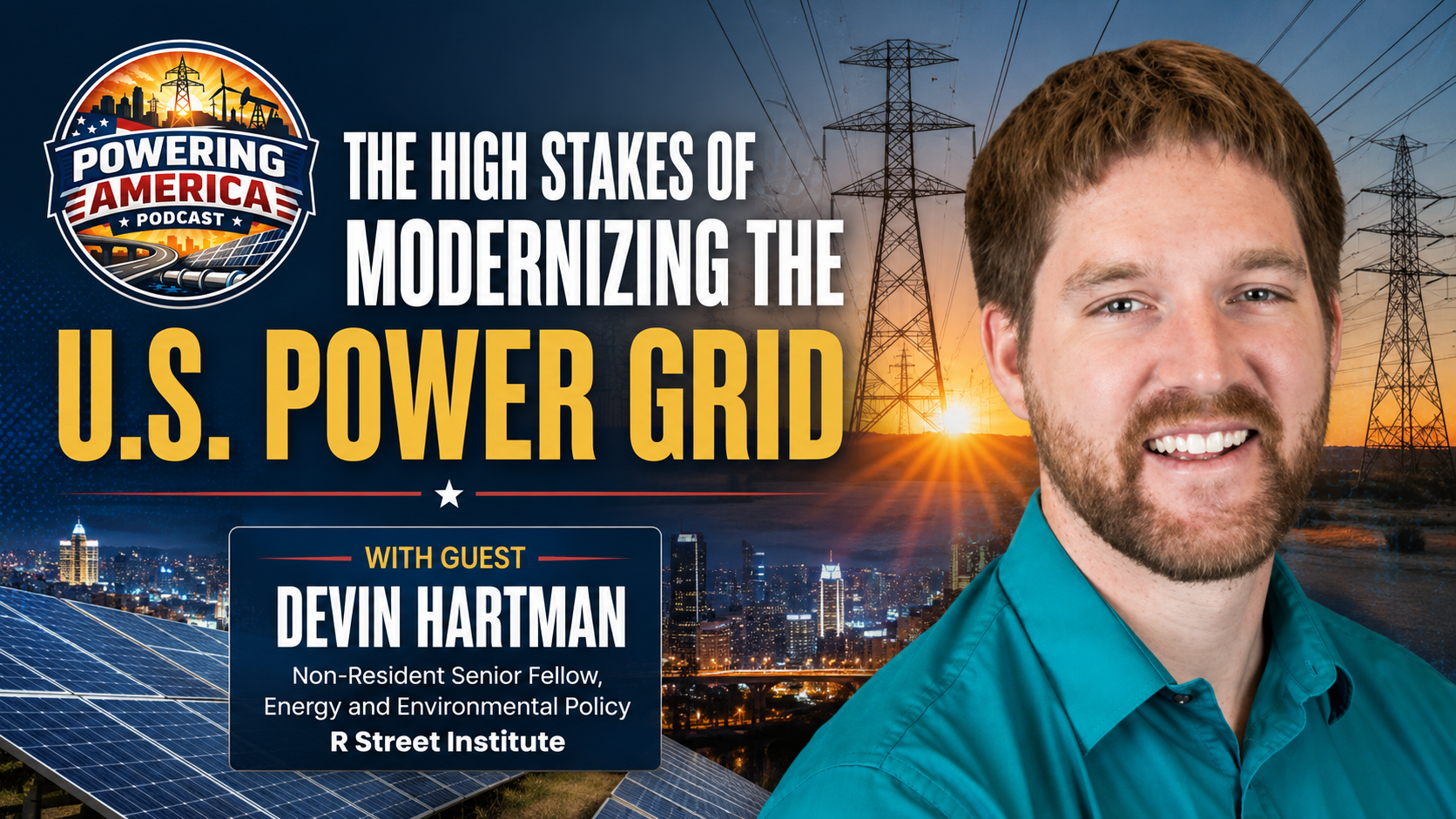
Powering America Podcast episode featuring Devin Hartman discussing Devin Hartman Discusses the High Stakes of Modernizing the U.S. Power Grid — R Street Ins…

In the latest episode of the Powering America Podcast, host Bryan Hyde interviews Devin Hartman, a Senior Fellow at the R Street Institute. Hartman discusses the complexities of energy policy, particularly focusing on electricity transmission challenges, regulatory oversight, and the need for consumer representation in transmission reform. He emphasizes the importance of improving existing infrastructure, enhancing economic planning, and fostering competition to ensure reliable and cost-effective energy delivery.

Devin Hartman Discusses Energy Policy and Transmission Challenges

0:00 / 0:00

Devin Hartman Discusses Energy Policy and Transmission Challenges

Devin Hartman Discusses Energy Policy and Transmission Challenges

Devin Hartman, a senior fellow at the R Street Institute, discussed the complexities of energy transmission and policy during a recent episode of the Powering America Podcast. With nearly a decade of experience in energy policy, Hartman emphasized the importance of understanding how electricity is transmitted from generation sites to consumers.

Hartman explained that the electricity transmission system is often taken for granted. "We drive by the power lines every day, flip the light switch, and expect it to work," he said. However, he noted that the process of transmitting electricity involves significant technical and economic challenges.

Electricity is generated primarily at large central power plants, which are often located far from urban areas. To deliver this electricity efficiently, it is transmitted over high-voltage lines. "The most cost-effective way to transmit electricity is on high-voltage transmission lines," Hartman said. After transmission, the voltage is stepped down for local distribution.

Despite its importance, building transmission infrastructure is both costly and contentious. Hartman pointed out that determining who benefits from a transmission line and how costs are allocated can lead to disputes. "There are usually thousands or millions of people who benefit from a single power line, which makes it difficult to pinpoint costs," he said.

Regulatory Oversight

The regulatory landscape surrounding electricity transmission is complex. Hartman explained that while the Federal Energy Regulatory Commission (FERC) has nominal authority over regional and interregional transmission planning, state and local governments play a critical role in permitting and siting. "Even if it's a big line that crosses six states, your state government has a say in that process," he said.

This multi-layered oversight can complicate the execution of large projects. Hartman noted that the involvement of various stakeholders often leads to delays and difficulties in getting projects approved.

Missing Voices in Transmission Reform

Hartman highlighted the lack of representation for consumer interests in transmission policy debates. "Suppliers tend to have very concentrated interests, while consumers are more dispersed and harder to organize," he said. This imbalance often results in policies that favor suppliers over consumers.

In recent years, the political landscape surrounding transmission policy has become more polarized, particularly as the push for renewable energy has increased. Hartman noted that the progressive movement has become more active in advocating for transmission reform, while conservative voices have been less prominent.

Recommendations for Reform

The R Street Institute has identified several key areas for reform to better represent consumer interests in transmission policy. Hartman outlined four main pillars of their reform agenda.

First, he emphasized the need to maximize capacity from existing transmission systems through innovative technologies. Second, he advocated for improved planning and cost allocation processes to ensure economic scrutiny of proposed projects. Third, Hartman called for increased competition in the planning and construction of larger transmission lines to drive down costs. Finally, he stressed the importance of transparency and accountability in regulatory processes.

The Role of Competition

Hartman acknowledged that while competition can drive efficiency, there are limits, particularly in the context of high-voltage transmission lines. "You don't want a bunch of redundancy there," he said. Instead, he suggested that competitive bidding for larger projects could lead to more cost-effective solutions while maintaining oversight for smaller, local projects.

Bipartisan Efforts for Change

Hartman discussed the R Street Institute's efforts to bridge the gap between consumer interests and conservative policy perspectives. He noted that as awareness of the need for transmission reform grows, there is potential for bipartisan support. "When we talked to conservatives about developing principles for transmission reform, they recognized the alignment with consumer interests," he said.

As the energy landscape continues to evolve, Hartman emphasized the importance of addressing transmission challenges to ensure reliable and affordable electricity for all consumers.

Interview Q&A

Q&A: Devin Hartman Discusses Energy Policy and Transmission Challenges

Powering America Podcast: Devin Hartman Discusses Energy Policy and Transmission Challenges

Q: Can you tell us about your background?

A: I have been working for the R Street Institute for roughly a decade. I previously ran the Electricity Consumers Trade Association for Large Industrial Energy Consumers, known as ELCON, and I was an economist at the Federal Energy Regulatory Commission and the Indiana Utility Regulatory Commission.

Q: What should consumers understand about electricity transmission?

A: The most cost-effective way to serve customers is through large central power plants located farther from consumers. This requires high-voltage transmission lines to efficiently transport electricity over distances. The process involves stepping up voltage for transmission and then stepping it down for local distribution.

Q: Why is building transmission infrastructure contentious?

A: Building transmission lines is expensive and complex due to the numerous beneficiaries involved. Unlike pipelines, electricity cannot be stored, and its flow must be carefully managed in real-time, complicating the planning and cost allocation processes.

Q: Who regulates transmission policy?

A: Most authority for planning regional and interregional transmission rests with the Federal Energy Regulatory Commission. However, permitting and siting are primarily managed at the state and local levels, leading to a complex regulatory landscape.

Q: What voices are missing in transmission reform debates?

A: The voices of consumers are often underrepresented compared to suppliers and developers. Suppliers have concentrated interests, while consumers are more dispersed and harder to organize, leading to a chronic underrepresentation of consumer interests in policy discussions.

Q: What are the four pillars of the R Street Institute's reform agenda?

A: The four pillars include:

  1. Increasing capacity from existing transmission systems through underutilized technologies.
  2. Improving planning and cost allocation processes to ensure economic scrutiny.
  3. Promoting effective competition for larger transmission projects to reduce costs.
  4. Ensuring transparency and accountability in grid governance.

Q: Is there a point where competition in transmission becomes inefficient?

A: Yes, while competition is beneficial for larger projects, local transmission projects often do not benefit from competitive bidding due to inefficiencies. Regulatory oversight can be a substitute for competition in these cases.

Q: How does the transmission system allow for different providers to use the same infrastructure?

A: The same transmission line is typically owned by one entity, but various power generators and end users can contract to use that infrastructure. Open access is a key principle, allowing competitive segments of the industry to utilize the transmission system.

Q: What is the R Street Institute doing to promote bipartisan reform in transmission policy?

A: We are working to disaggregate the reputation of transmission policy from partisan agendas. By emphasizing the need for reform based on cost and reliability, we aim to unite conservative and consumer interests around a "consumer-first framework."

Q: How has the conservative community responded to transmission reform needs?

A: The conservative community has recognized the need for infrastructure investment due to aging systems and increased demand, particularly from data centers. This recognition aligns with consumer interests in achieving least-cost reliable service.

Q: What challenges do existing transmission systems face?

A: Existing infrastructure is aging, and there is a growing demand for capacity. Many regions are experiencing constraints in their transmission systems, which complicates the ability to connect new power supply sources.

Q: How does the R Street Institute engage with consumer groups?

A: We have convened national consumer groups to identify shared priorities and align efforts on transmission reform. This collaboration has helped to elevate consumer voices in the policy process.

Q: What is the significance of economic oversight in transmission planning?

A: Economic oversight is crucial to ensure that transmission projects are prudent and cost-effective. Without proper scrutiny, the system can become inefficient and costly for consumers.

Q: How can consumers benefit from improved transmission policies?

A: Improved policies can lead to lower costs and more reliable electricity service. By advocating for transparency and competition, consumers can gain access to better infrastructure and pricing.

Key takeaways

  • The most cost-effective way to serve most customers is to have large central power plants, and those are gonna be located farther away from customers.
  • It turns out it's expensive and contentious to build, and a lot of times, there's so many beneficiaries of it.
  • There's usually thousands or millions of people who benefit from a single power line, which means a lot of times you need these big regional planning apparatuses to come in.
  • We've seen a pretty chronic underrepresentation of consumer interests.
  • A lot of times what we're seeing in this field is you're having this... we don't subject most of transmission expansion to cost-benefit tests.

About the guest

Devin Hartman

Senior FellowR Street Institute

Full transcript

Show full transcript
[00:00:00] Welcome to the Powering America podcast. I'm Bryan Hyde, and today I'm joined by Devin Hartman. He is a senior fellow with the R Street Institute. And Devin, welcome to the show. Would you take a moment, just kinda tell us a little bit about yourself and, and about your background? Absolutely. Um, thanks for having me on the show, first off. Um, I've, uh, been working for the R Street Institute for roughly a decade. Um, I used to also run the Electricity Consumers, uh, Trade Association for Large Industrial Energy Consumers, uh, known as ELCON. And then I used to also be, uh, an economist at the Federal Energy Regulatory Commission, and then for the Indiana Utility Regulatory Commission, which is like the state public service commission. Every state has one. So my background's always been in more like the technical side of the power industry as well as the consumer side, and then with, with R Street a lot more in sort of the free market, limited effective government community. I'm guessing if there is one thing that we [00:01:00] take for granted and rarely think of, it's, uh, it's the, the transmission of electricity, um, across the, the power grid. I mean, we drive by the power lines every day. We, we flip the light switch and it comes on, and we just expect it. The only time we may think about it is when the, the power is off for some reason. But talk to me a little bit about, uh, transmission and, and, uh, t- tell me what are the things that the average consumer of electricity needs to understand about what it takes to get it from where it's generated to, to where it's being used? Absolutely. So usually whenever we talk about the power industry, everyone has all sorts of opinions on how to produce it, right? They love or hate nuclear, or they love or hate wind, solar, fossil fuels, et cetera. But it's important to remember that the economics of this industry are such that overwhelmingly the most cost-effective way to serve most customers is to have large central power plants, and those are gonna be located farther away from customers, which means you have to transmit that, those [00:02:00] electrons from point A to point B. And the most cost-effective way to do that is on high-voltage transmission lines, right? So the, the power plants produce it, it gets what we call stepped up to a high-voltage level, transmitted over distances efficiently on transmission lines, and then it gets stepped down to lower, uh, voltage levels. Then it goes into your, you know, your local, uh, distribution system, and you think of the poles and wires in your neighborhood. Those are usually more local, um, lower voltage, uh, infrastructure. So that's the, the overall architecture of, of how almost all customers are served. And transmission might seem pretty straightforward. It's just whatever big, bigger poles and wires than what's in your typical neighborhood. But it turns out it's- Expensive and contentious to build. And a lot of times, uh, there's so many beneficiaries of it. One thing that's very unique about transmission that's distinct from, say, [00:03:00] uh, pipelines, right, for oil and gas, is that we can't store electricity, and we can't really control very well, like, where it goes, and that means we can't ship it quite as easily from point A to point B. We sort of generate it on an as-needed basis, and the whole system has to be in perfect balance across a whole region, which means you have a lot of these broader networks. And a lot of times determining who benefits from what transmission line and how much they should pay for it gets very contentious. Whereas with pipelines, it's a little bit easier to say these local areas benefit from it exactly this much, and they can enter a voluntary contract. And we can do that to some degree with transmission, but for the most part, transmission is very hard to, to, to pinpoint. There's usually thousands or millions of people who benefit from a single power line, which means a lot of times you need these big regional, um, planning [00:04:00] apparatuses to come in and then determine what's cost effective to build, if we can get it out for competitive bid, and then figure out who pays for it. So there's... Uh, and I should also... I'd be remiss if I didn't mention you have to get it permitted and sited, which is a whole nother can of worms. So, um, there's a lot of pieces that actually go into building, um, what seems like very simple, straightforward infrastructure. So who, who sets policy when it comes to, to regulating all of that? You just, you made it a... You, you described it in a very straightforward way, but I'm already seeing there's a level of complexity there that, um, I'm sure adds a lot of different angles. Who oversees all that? So, uh, the answer is not quite as straightforward as, as a, as a one-line, uh, you know, pun, pu- as a one-word punchline or one-sentence punchline here. Um, nominally, most authority rests with federal authorities, um, at least for the planning of [00:05:00] regional and interregional transmission. Think bigger wires, and then determining who pays for that. So the rules for planning and, and that cost allocation piece in most areas reside, um, with the feds, and that's the Federal Energy Regulatory Commission. However, most of the permitting and, and certainly the siting process almost exclusively goes down to the state and a lot of times local levels. And so when you say like who actually has authority over these lines, it actually depends on the function, depends on the, the jurisdiction. And even those things that the feds nominally have jurisdiction over- Those processes are actually broken up at the regional level, and those regional grid operators that do the planning, they have rules that the r- the, uh, the, the feds set. But those regional entities work with states, and so states are a part of the process, and states need to be [00:06:00] brought into that process productively because they have a, a say-so in it. So even if it's a big line that crosses, like, six states, right, your state government has a say in that process, and then they have to coordinate that with the region, and then that region has rules that have to be approved by the feds. And then each state has to go through and actually approve the siting of it, and if someone's upset about it, they can sort of veto, uh, the project in many cases, and so then you're back to square one. So it, it's a lot of cooks in the kitchen, which is why it's can be really difficult to execute, especially these r- really big projects. I'm guessing that, uh, anybody who's listening closely is, uh, not going to just take it for granted next time they flip a light switch. They're gonna realize it takes a lot to, to get that, that power where it needs to go. Talk to me about the, the voices that have been traditionally missing when it comes to, uh, transmission reform debates or, or, or f- [00:07:00] shaping transmission policy. Um, who, who should be a part of it but, but so far hasn't been? Yeah, so I think, y- and you see this broadly in the, in the power industry, um, I think you have the developers, right, the folks who, who build the infrastructure and own it, operate it, and then you also have the folks, um, uh, who, you know, the consumers who are the other beneficiaries of this, right? So, right, the, you know, the power plant owners and the consumers, and then of course the transmission developers themselves. Now, we see this in every industry. It's not unique to the power industry, but suppliers tend to have very concentrated interests in the, in a, in a certain policy arena, right? And the more byzantine that area is, that complexity means you have to get involved with very complex regulatory processes, and transmission is exceptional in that regard. And what it does is it concentrates more the interest of participation [00:08:00] in those suppliers, whereas the beneficiaries, like cons- the, the broader beneficiaries like consumers are very dispersed, and they're harder to organize and represent. And it's very similar with, uh, taxpayer interest, for example, too, right? And, and so a lot of times what you see is a very small group of suppliers very well represented in the policy process. Consumers are oftentimes, uh- Represented by one to two orders of magnitude less, and that's based on, you know, you know, the, the legal costs of representation or the, the, the economists or technical consultants that they can afford. So it's unsurprising that we've seen a lot more of the policy architecture reward a lot of incumbent suppliers, and we've had a lot of issues in this industry bubbling up, and we'll get into the energy affordability concerns that have really come to the forefront. But what we've seen is a pretty c- chronic underrepresentation of [00:09:00] consumer interests. And then on the other side is, of course, when it comes to legislative, um, you know, actors, regulators, um, governor's offices, the White House, we've-- we saw a lot of very bipartisan kind of mutual interest in this in decades past. Um, about a decade ago, we started to see some more partisanship really creep into it, and that's in part because, uh, to build more renewables, you need disproportionately more transmission. And we've seen the politics of renewable energy sort of start to creep into transmission the last decade in particular. Now, there's a bunch of reasons why, um... So I think there was a big reason why a lot of the progressive movement got really active in transmission reform this last decade, and conservatives kind of didn't know how to respond to that. So a lot of our work, um, over the last few years has been to work with both the consumer [00:10:00] groups and the conservative groups to figure out how do you elevate these missing voices in this conversation, so we can really find good public policy, um, that, that benefits, um, the entire country. Okay, so let's, let's start with, um, consumers. And, and I specifically, I'm, I'm looking at a piece here on the R Street, uh, uh, website and, and would love for you to kind of elaborate on, um, the four pillars that, that you recommend or that your, your institute recommends, um, when it comes to the, the reform agendas. Let's talk consumers first, though. Absolutely. So, um, we've done two convenings with all the national, um, consumer groups, so the one I used to run, some of the other trade associations, um, the organizations that represent residential consumers, the ones that represent the data centers, the ones with manufacturers, even the ones that represent transmission-dependent utilities. Think like your, you know, uh, local municipal utility, right? Um, [00:11:00] and so, uh, we've, we got all those folks together, and we kept, um, over the last, uh, few years, we've kind of kept tabs on what their biggest priorities are, where they align. And we've, we've, we whittled it down to, like, four main areas that they really wanted to key in on. One thing that always jumps off the page is the- There's a lot of ways to squeeze more capacity out of the existing transmission system. There's some really cool technologies. Most of them are homegrown, you know, things we developed in our Department of Energy laboratories that have been sitting on a shelf for, like, a decade or more, really grossly underutilized. And so getting more, uh, efficiency out of the current system is really important. So that's, that's one big thing right off the bat. Um, another thing I'd flag is, is really doing better planning and cost allocation processes, like I mentioned. Um, a lot of times what we're seeing in this field is you're having this, um, uh... We, we, we [00:12:00] don't subject most of transmission expansion to cost-benefit tests, and most of it is developed by, uh, a single utility that can propose a project and really gets no economic scrutiny from a regulator, and it's exempt from any competitive process. So when we talk about, like, why transmission costs and... have really been rising, like, disproportionately, it's got all the symptoms of a system that really lacks economic discipline. So really injecting good economics into planning and cost allocation is really important. So that's sort of like your second principle. One of those practices that really jumped out is our third principle, and that's having effective competition. Now, it's not practical to put out all infrastructure for competitive bidding. Think, like, really local projects, local transmission. But for these bigger wires, it really... the most economic way to do it, both here and abroad, is to have an [00:13:00] independent planner identify those system needs and then put those needs out for competitive bid. Um, we're about to release a big study on that over the, the coming weeks, and we're seeing a ton of advantages to, to, to, uh, executing that process. Saves-- It's gonna save consumers at least tens of billions going forward based on the, the recent evidence. And then the last principle is just having good grid governance, so making sure you have transparency and accountability in a lot of these processes. So to your-- the, the question that you opened with me on, like, who's responsible for this? The Federal Energy Regulatory Commission oversees these rules for, for larger scale transmission. But the local scale transmission, there's actually, like, a total gaping hole. Um, the states actually typically don't provide any type of economic oversight of that to see if it's prudent infrastructure for utilities. And then, uh, the feds Realized that they weren't doing it either, [00:14:00] and so, uh, three years ago, there was a, a conference where the feds and the state regulators got together. They each looked at each other and they said, "Wait, you're not doing this? I'm not doing this. But we're building 90% of transmission in this country without any economic criteria or oversight, exempt from competition." And so therein your problem lies. So a lot of this is getting more transparency, accountability, proper oversight, and you have to have good institutions to execute these processes well, otherwise you just keep falling into the same, uh, m- mess that we've, uh, we've kind of fallen in, um, the last few, uh, few years here. Devin, is there a place where, where competition actually hits a point of diminishing returns? And, and I'm thinking specifically in terms of, like, you know, putting up high-tension power lines, um, that is a, that's a pretty critical piece of infrastructure. But it seems like it wouldn't make sense for, for every provider to have their own set. I mean, I, I'm thinking of images I've seen out of India of, you know, power poles with [00:15:00] spaghetti wires coming from every direction. Um, how does that play out? Do, do existing lines, you know, the, does the existing infrastructure, is it sometimes used by differing, um, power pr- providers? Yeah, absolutely. So the, the same, the same power line is, is gonna be owned and operated by the same entity. Um, and then you have a whole variety of different entities that use that infrastructure to contract, right? So, um, the power generators and the end users are making deals with each other, and then they need to have access to that transmission line. And so the, the general, um, idea behind transmission law is to have open access, and that means that the, um, competitive segments of the industry that are, you know, power generation markets and then, uh, retail supply, those two sides can contract with each other and make sure they have access to, to trans- uh, to use the transmission [00:16:00] system. And then that all gets quarterbacked in real time, um, by the air traffic controller of the grid, which in most of the country is an independent entity, and that's the one that helps decide which power plants get turned on, which ones, you know, how much they operate, when they turn off, et cetera. And that's based on, um, you know, fluctuations in, in, in demand and then where, uh, electricity needs to go, where the transmission lines are met, um, you know, at, at, at their peak, and then, uh, you know, routing electricity through alternative pathways. So it's a very convoluted system. But, um, yeah, it's, it's important to note that there are some purely market, uh, segments of, of the power industry that are ripe for pure competitive markets like power generation. And then there's the aspects of the industry that have some natural monopoly characteristics and some, like, big volt- high voltage lines. You don't wanna have a bunch of redundancy there. But it doesn't mean that one [00:17:00] entity can be the only one that should build and operate them. If you put it out for bid, it's the cheapest way to get the infrastructure built. But when you get to that local scale, that those smaller projects, it's a lot of times just not as efficient to put thousands of these projects out that, that are much smaller in scale for bid. So there is a point where you kind of, like, call off the competitive bidding element and then just, you know, insert, like, proper, like, regulatory oversight as a substitute for competition. Okay, one final question for you, Devin, and that is you had mentioned, um, you know, conservative voices have been kind of few and far between i- in shaping transmission policy. Talk to me about some of the work being done at the R Street Institute, uh, to help promote, uh, bipartisan reform. Yeah. It's a, it's a great question. So I think what we saw was, um... I think first off was kind of disaggregating sort of the reputation of, of transmission policy and the need for reform from [00:18:00] the, you know, from what, what the actual underlying, like, needs are. So when we started to explain to folks, like- You need trans-- you need, uh, reforms to transmission because the status quo is so opaque and costly. Then folks really start churning. They're like, "Wait, this isn't just about like a, a renewables agenda enableization. This can be something that's also really focused on bread and butter, like least cost reliable service." And the conservative, like, community, like, really speaks that language set. So they really wanted to rally around this, and they kind of recognized when you unpack it, like, part of the reason that we have to reform the system is because, A, your existing infrastructure's getting really old, and we need to reinvest in it, and we need to re-up it, upgrade it. B, you need more capacity, and the thing that's really put that over the edge is all the new demand growth that's come on the last couple years, I mean, highlighted by [00:19:00] the data center expansion. People are really recognizing that we've lost the amount of headroom that we have in most regions on the transmission system, and that's the biggest thing gumming up the ability to, to get new data centers online and connected with power supply sources. So there's a lot of, like, national prioritization from a strategic perspective that comes back to power infrastructure, and people are recognizing a lot of the constraints are in transmission. So when the conservative community started to recognize, like, "Whoa, we're not building enough infrastructure, and then what we are building is unnecessarily expensive," like, all right, there's a case for us to get involved. And that case, when you lift up the hood, is very much to align with consumer interests, um, because that's what's gonna get you least cost reliable service. So when we talked to them about developing principles, they said, "You know what? Let's have it called a consumer-first framework." And that's why you see such a, a degree of overlap between what conservatives wanted to [00:20:00] do and what, uh, consumers wanted to do. Even though we ran those two efforts in parallel, um, the issue sets match up very well. Again, we are talking with Devin Hartman. He's a senior fellow with the R Street Institute, and you can check out their work at rstreet.org. Devin, thank you so much for joining us today on the Powering America Podcast. Thank you very much, Brian.

Filed under