Archive
All Episodes
Conversations on energy, infrastructure, policy and economic growth.
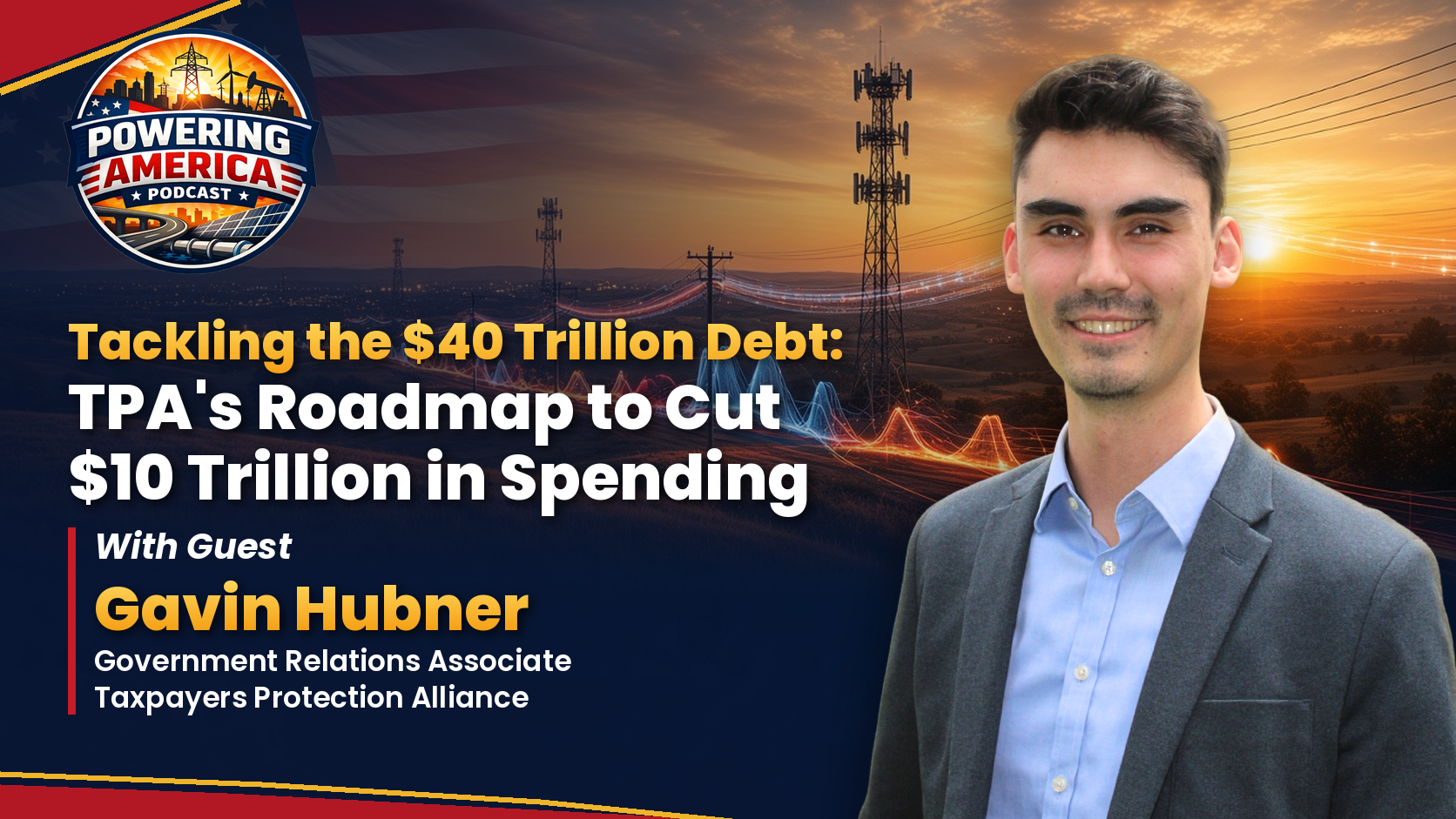
November 24, 2026 · Gavin Hubner, Taxpayers Protection Alliance
Cutting the $40 trillion national debt: TPA's Gavin Hubner on a $10 trillion spending plan
The Taxpayers Protection Alliance says Congress could cut more than $10 trillion in federal spending over 10 years, and Gavin Hubner, TPA's government relations associate, explains how on Powering America. With the national debt past $40 trillion, Hubner walks through the group's report, "Cutting the Tab: 40 Ways to Reduce America's Debt," starting with two transportation proposals: limiting highway and transit spending to Highway Trust Fund revenues instead of backfilling the fund from general revenue, and cutting selected federal transportation and education grants by one-third. He also discusses curbing improper payments and unmet work requirements in programs such as Medicaid, the roughly $2.1 trillion lifetime cost of the F-35 fighter program, why the federal gas tax that funds highways has not been raised since the early 1990s, and why Congress keeps kicking the can down the road. Hubner closes with a practical step for taxpayers: watch how money is spent close to home, because local pushback ripples up to the states and Washington.
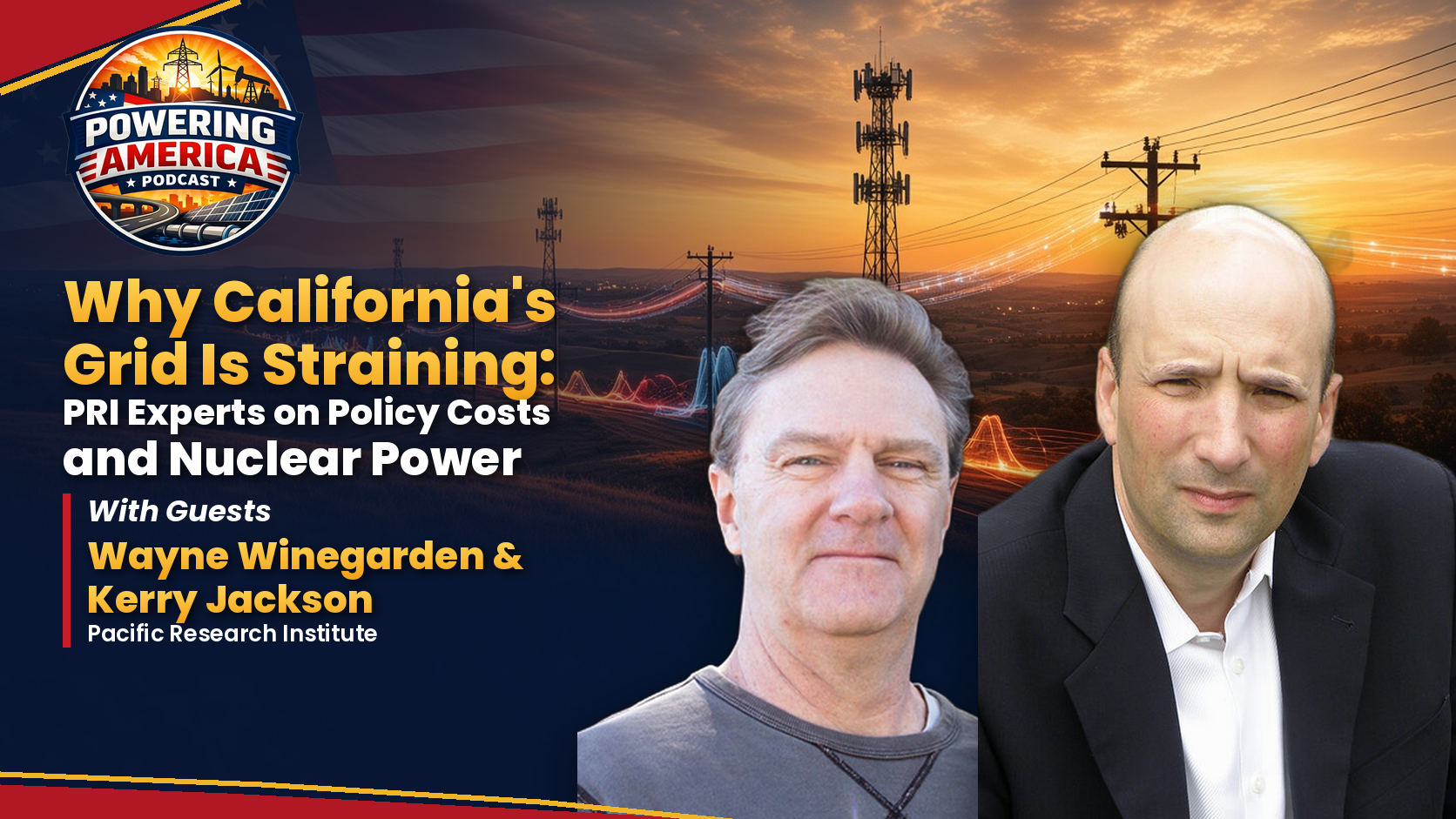
November 17, 2026 · Wayne Winegarden, Pacific Research Institute
Why California's Grid Is Straining: PRI Experts on Policy Costs and Nuclear Power
California's soaring energy costs have economic and regulatory roots, including a 100% renewable-grid mandate by 2045 that has doubled electricity rates relative to the national average, say Wayne Winegarden and Kerry Jackson of the Pacific Research Institute. The panel unpacks how state mandates for a 100% renewable grid by 2045 have doubled electricity rates relative to the national average, the hidden systems-level costs of solar and wind generation, and the vital role that Small Modular Reactors (SMRs) can play in providing affordable, reliable, and zero-carbon baseload power.
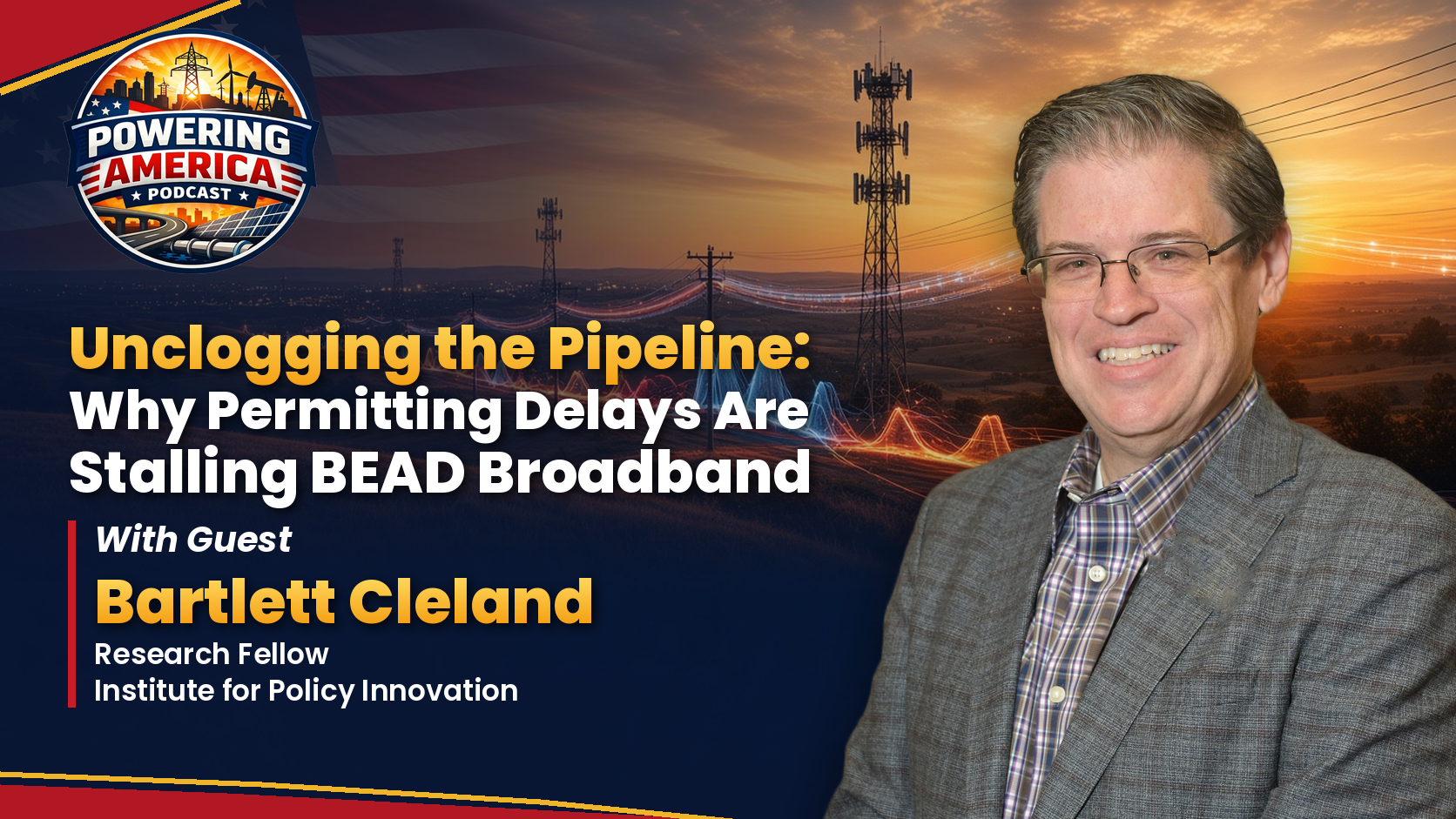
November 10, 2026 · Bartlett Cleland, Institute for Policy Innovation
Unclogging the Pipeline: Why Permitting Delays Are Stalling BEAD Broadband
Permitting delays are hindering the Broadband Equity, Access, and Deployment (BEAD) program, says Bartlett Cleland, a senior fellow at the Institute for Policy Innovation, in a Powering America Podcast interview. They discuss the critical role of broadband in the economy, the historical context of the BEAD initiative, and the significant permitting delays that are hindering its implementation. Cleland highlights the need for streamlined permitting processes to expedite broadband expansion in underserved communities across the United States.
November 3, 2026 · Gordon W Tomb, The Commonwealth Foundation
The Net-Zero Illusion: Gordon Tomb on Green Mandates and the Grid
Green energy mandates are affecting electricity prices and reliability, says Gordon W. Tomb, a senior fellow at the Commonwealth Foundation, in a Powering America Podcast interview. Tomb discusses Pennsylvania's Alternative Energy Portfolio Standards, which require a percentage of electricity to come from renewable sources, and critiques the effectiveness and economic impact of such policies. He argues that fossil fuels and nuclear power remain the most viable energy sources for affordable electricity, while highlighting the political challenges in shifting energy policy.
October 27, 2026 · Erik Peinert, Boston University
Derailed Competition: The $85B Rail Mega-Merger Threatening US Supply Chains
In the latest episode of the Powering America Podcast, we speak with Erik Peinert, an assistant professor at Boston University and senior fellow at the American Economic Liberties Project. They discuss the proposed $85 billion merger between Union Pacific and Norfolk Southern, highlighting concerns about reduced competition, potential negative impacts on labor, and increased shipping costs. The Surface Transportation Board will ultimately decide the merger's fate, with final comments due by November 18.
October 13, 2026 · Diana Moss, Progressive Policy Institute
Diana Moss: How Corporate Monopolies Threaten Free-Market Competition
Corporate monopolies are a threat to free-market competition across industries, says Diana Moss, vice president and director of competition policy at the Progressive Policy Institute, in a Powering America Podcast interview. Moss discusses the significance of U.S. antitrust laws, their historical context, and how corporate monopolies threaten free-market competition, particularly in light of recent political influences on enforcement practices. She emphasizes the need for vigorous antitrust enforcement to protect consumers and promote innovation.
October 6, 2026 · Devin Hartman, R Street Institute
Energy policy and transmission challenges, with Devin Hartman of the R Street Institute
Energy policy and transmission remain a hard coordination problem, says Devin Hartman, a senior fellow at the R Street Institute, in a Powering America Podcast interview. Hartman discusses the complexities of energy policy, particularly focusing on electricity transmission challenges, regulatory oversight, and the need for consumer representation in transmission reform. He emphasizes the importance of improving existing infrastructure, enhancing economic planning, and fostering competition to ensure reliable and cost-effective energy delivery.
September 22, 2026 · Arnav Rao, Open Markets Institute
Transportation Analyst Says UP-NS Merger Would Harm Shippers and Communities
The proposed Union Pacific-Norfolk Southern merger would harm shippers and communities by consolidating market power and increasing freight traffic, says transportation policy analyst Arnav Rao of the Open Markets Institute. Rao argues that the merger could harm shippers and communities by consolidating market power, increasing freight traffic, and exacerbating issues related to pricing and service reliability. He emphasizes the importance of a strong rail system for industrial growth and environmental sustainability in the United States.

September 17, 2026
SPECIAL BRIEFING: Opposition grows to Union Pacific-Norfolk Southern rail merger
In a special briefing on the Powering America Podcast, we discuss growing opposition to the proposed $85 billion merger between Union Pacific and Norfolk Southern. Critics, including state attorneys general, agricultural organizations, and labor unions, argue the merger could reduce competition, increase shipping costs, and threaten jobs, while the companies claim it would enhance service and efficiency. The merger requires approval from the Federal Surface Transportation Board, which will assess its impact on competition and public interest.
September 15, 2026 · Domenico Ferraro, The Goldwater Institute
Data Centers and AI: Separating Hype from Reality with Domenico Ferraro
The hype around data centers and AI has to be weighed against real costs, especially electricity demand and labor-market disruption, says Domenico Ferraro, an associate professor at Arizona State University's W.P. Carey School of Business, in a Powering America Podcast interview. The discussion focuses on the implications of data centers and artificial intelligence, highlighting the balance between their potential benefits and the associated costs, particularly regarding electricity demand and labor market disruptions. Ferraro emphasizes the need for strategic investment and stakeholder coordination to harness the value of these technologies while addressing the economic challenges they present.

August 31, 2026 · Dr. Emil Panzaru, Consumer Choice Center
The World Airport Index: Dr. Emil Panzaru on how airports compare for consumers
The World Consumer Airport Index evaluates 60 airports across 14 categories, says Dr. Emil Panzaru, research director at the Consumer Choice Center. The index highlights consumer comfort, accessibility, and service quality, revealing that Düsseldorf Airport ranks as the best while Frankfurt Airport struggles with operational issues. The findings emphasize the importance of competition among airlines and the need for airports to learn from each other to improve traveler experiences.

August 25, 2026 · Marc Scribner, Reason Foundation
US Air Traffic Control: An Outdated Model?
The Powering America Podcast features Marc Scribner, a Senior Transportation Policy Analyst at Reason Foundation, discussing the challenges of the U.S. air traffic control system. Scribner highlights deficiencies in the current model, which has not evolved since the 1950s, and contrasts it with Canada's successful separation of air traffic control from safety regulation through Nav Canada. He emphasizes the need for modernization and efficiency in U.S. air traffic management, noting that many countries have adopted more effective models.
August 18, 2026 · Pete Sepp, National Taxpayers Union
Data Centers: The New Infrastructure, Taxpayer Friend or Foe?
Data centers are a new form of infrastructure with real effects on local tax bases, says Pete Sepp, president of the National Taxpayers Union, in a Powering America Podcast interview. Sepp discusses the economic impact of data centers on local tax bases, highlighting their role in contributing to public budgets and contrasting their benefits with areas that impose restrictions on their development. The conversation also addresses misconceptions about data centers and their relationship to taxpayer interests.
August 11, 2026 · Thomas Aiello, National Taxpayers Union
Advanced Recycling and the Recycled Materials Attribution Act
The Recycled Materials Attribution Act is a central fight in advanced recycling policy, says Thomas Aiello, vice president of federal affairs at the National Taxpayers Union, in a Powering America Podcast interview. They discuss the challenges of recycling in the U.S., the need for federal standards, and the proposed Recycled Materials Attribution Act, which aims to streamline regulations for recycled materials. Aiello emphasizes the importance of advanced recycling technologies and the potential economic benefits of improving recycling rates.
July 28, 2026 · Kit Pfeiffer, Energy Freedom Alliance of the Rockies
Energy costs and conflicts, with Kit Pfeiffer of the Energy Freedom Alliance of the Rockies
Global energy costs and policy conflicts are showing up in local bills and investment decisions, says Kit Pfeiffer, president of the Energy Freedom Alliance of the Rockies, in a Powering America Podcast interview. Pfeiffer discusses the impact of global conflicts on energy prices, the role of U.S. domestic production, and the regulatory environment affecting energy resources in states like Colorado. He emphasizes the interconnectedness of global energy markets and the implications of policies on energy independence and consumer costs.
July 21, 2026 · Elizabeth B. Stelle, The Commonwealth Foundation
The Commonwealth Foundation's Elizabeth B. Stelle: Restoring Pennsylvania's Energy Edge
Pennsylvania still plays a major role in coal, oil, natural gas and nuclear energy and needs to adapt to rising costs and demand, says Elizabeth B. Stelle, vice president of policy at the Commonwealth Foundation. Stelle highlights Pennsylvania's significant role in coal, oil, natural gas, and nuclear energy production, emphasizing the state's need to adapt to rising energy costs and increasing demand. The conversation also addresses the importance of sound energy policies, the impact of regulations on energy development, and the challenges posed by carbon taxes and renewable energy mandates.
July 7, 2026 · Neel Brown, Progressive Policy Institute
Neel Brown: Can better policy unlock America's advanced recycling potential?
Advanced recycling can address America's plastic waste crisis by breaking down contaminated plastics at a molecular level, says Neel Brown, managing director of the Progressive Policy Institute. Brown explains how advanced recycling differs from traditional methods by breaking down contaminated plastics at a molecular level, allowing for the recycling of materials that are typically sent to landfills. He emphasizes the need for supportive policies and public awareness to enhance recycling rates and reduce landfill waste.
June 30, 2026 · Bartlett Cleland, Institute for Policy Innovation
‘Why AI Needs the Midwest’ with Bartlett Cleland of the Institute for Policy Innovation
AI infrastructure, especially data centers, can drive economic growth in the Midwest, says Bartlett Cleland, a senior fellow at the Institute for Policy Innovation, in a Powering America Podcast interview. Cleland discusses the critical role of artificial intelligence infrastructure, particularly data centers, in driving economic growth in the Midwest and highlights the potential job creation and technological advancements that could arise from this investment. He also addresses concerns about foreign funding aimed at opposing data center development in the U.S. and the importance of public understanding in navigating these challenges.
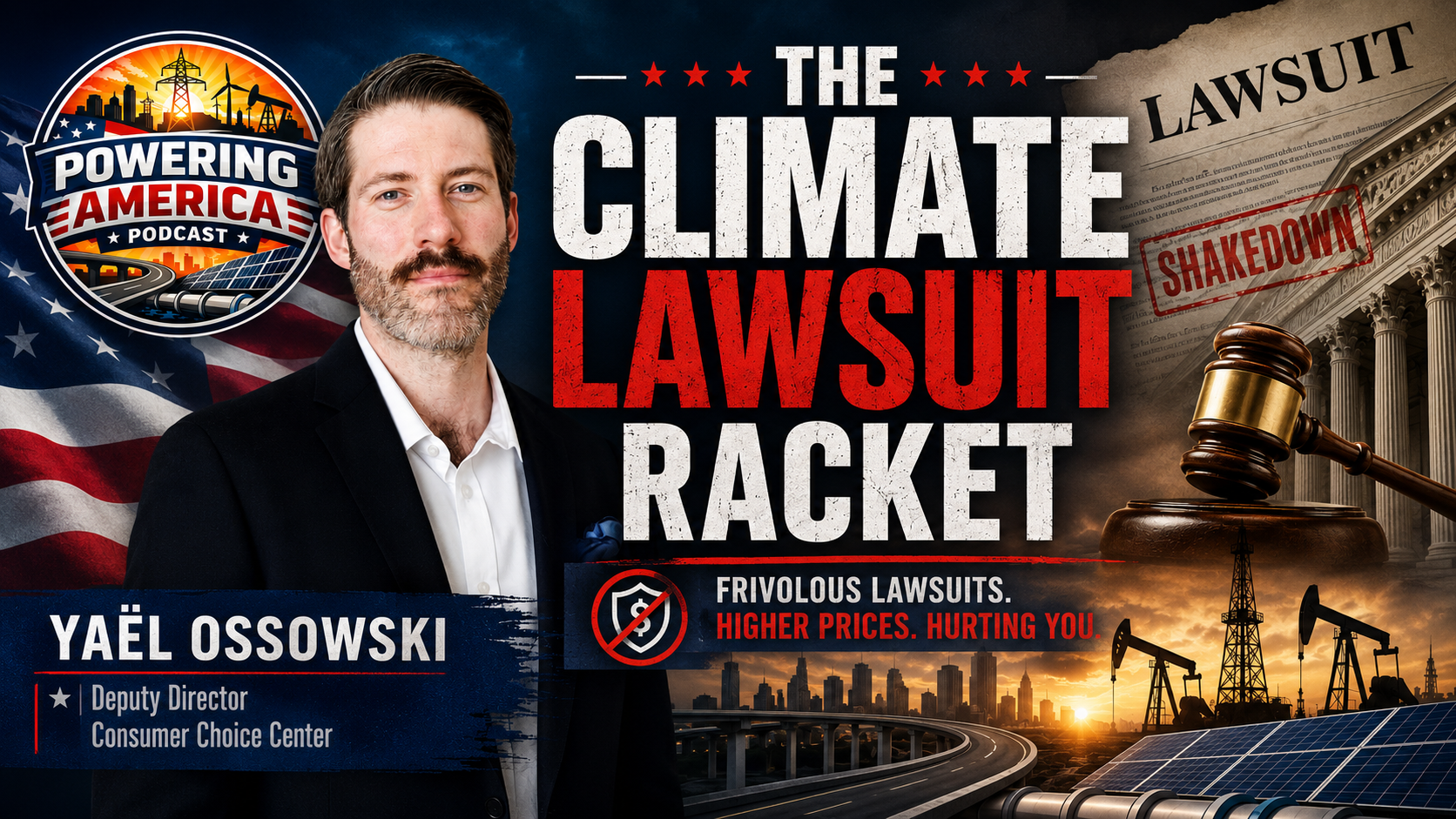
June 23, 2026 · Yaël Ossowski, Consumer Choice Center
The Consumer Choice Center's Yaël Ossowski on 'The Climate Lawsuit Racket'
Climate litigation has become a racket that lands on consumers, says Yaël Ossowski, deputy director of the Consumer Choice Center, in a Powering America Podcast interview. They discuss the implications of climate-related lawsuits against energy companies, particularly in blue states like California and New York, and the introduction of the Stop Climate Shakedowns Act of 2026, which aims to move state lawsuits to federal court and reduce frivolous litigation costs that ultimately impact consumers. The conversation highlights the role of various environmental groups and the economic effects of these legal battles on energy prices.
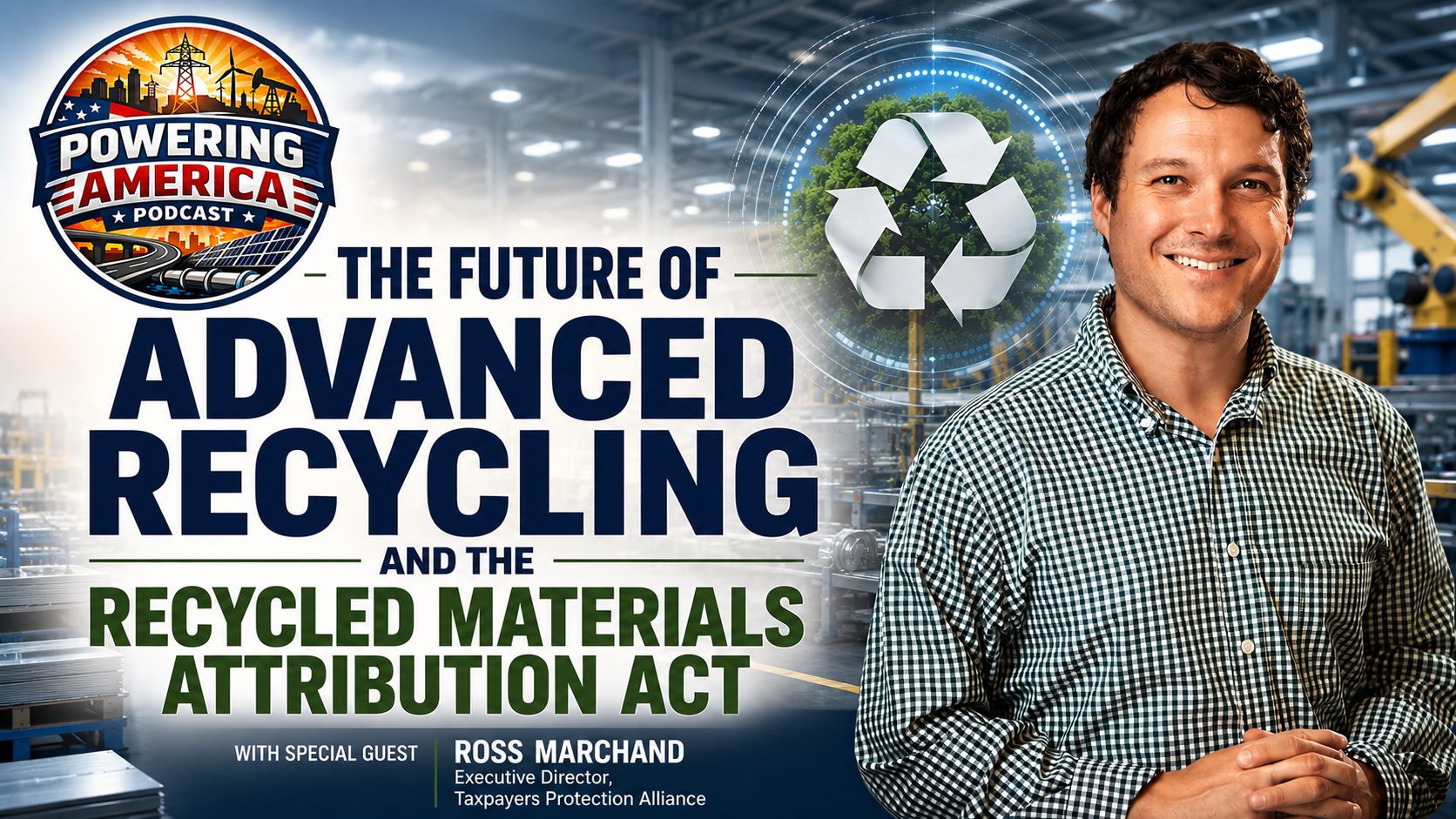
June 16, 2026 · Ross Marchand, Taxpayers Protection Alliance
The future of advanced recycling and the Recycled Materials Attribution Act, with Ross Marchand
The Recycled Materials Attribution Act is central to the future of advanced recycling, says Ross Marchand, executive director of the Taxpayers Protection Alliance. Marchand discusses advancements in recycling technology, the economic potential of increased recycling rates, and the regulatory challenges posed by state and federal guidelines. The conversation highlights the importance of a federal standard to promote truthful recycling claims and the economic benefits that could arise from a more efficient recycling system.
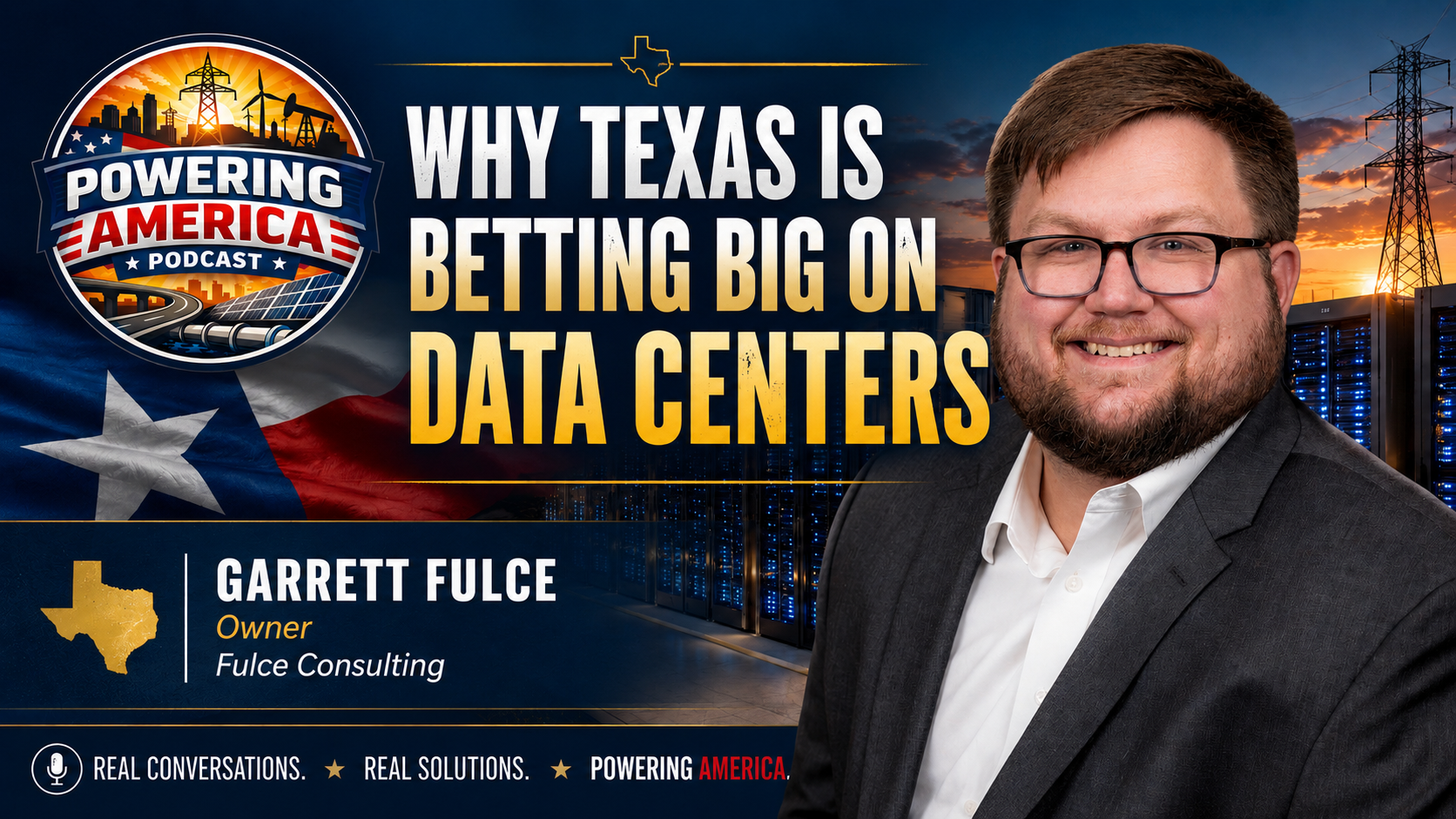
June 9, 2026 · Garrett Fulce, Fulce Consulting
Why Texas is betting big on data centers, with Garrett Fulce
Texas is leaning into a growing data-center industry, and its regulatory approach tries to balance community concerns with technological advancement, says Garrett Fulce, owner of Fulce Consulting. Folse highlights Texas's historical adaptability to new technologies, comparing the current data center boom to past innovations like oil and gas and railroads. He emphasizes the importance of a regulatory environment that balances community concerns with the need for technological advancement, suggesting that Texas's approach could serve as a model for other states.
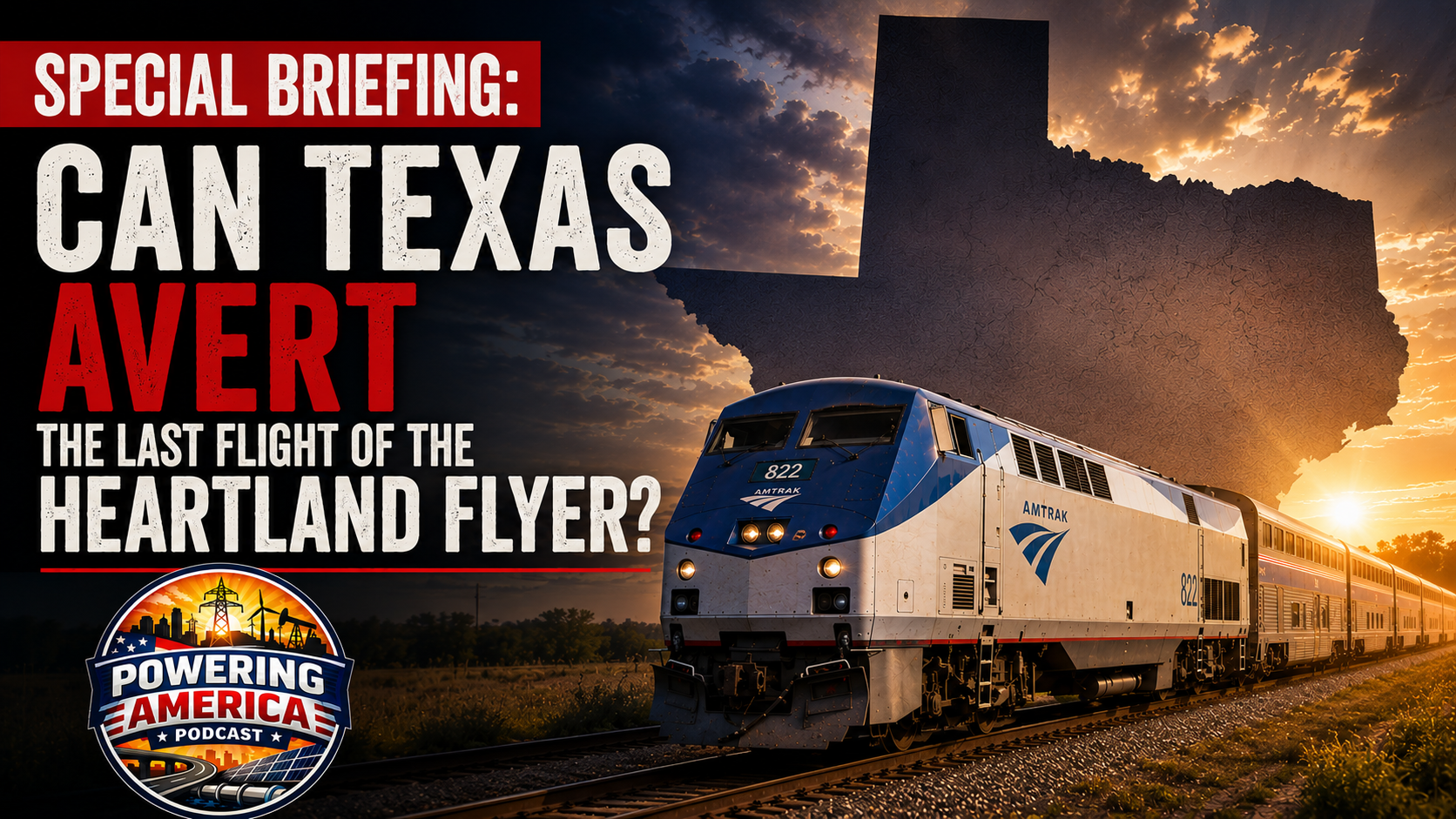
June 4, 2026
SPECIAL BRIEFING: Can Texas avert the last flight of the Heartland Flyer?
The Powering America Podcast episode discusses the future of the Heartland Flyer, an Amtrak train connecting Oklahoma City and Fort Worth, Texas. Despite achieving record ridership and revenue, the train faces potential shutdown due to Texas not securing funding in its budget. The episode highlights the significance of the Heartland Flyer as a vital transportation option for many residents and its role in events like the annual Red River Rivalry football game.
June 2, 2026 · Ross Eisenberg, America's Plastic Makers
America’s Plastic Makers President Discusses Economic, Environmental Benefits of Recycled Materials Attribution Act
Ross Eisenberg, president of America’s Plastic Makers (APM), American Chemistry Council, discusses the Recycled Materials Attribution Act, a bipartisan bill that would establish federal standards for advanced recycling and provide regulatory certainty for manufacturers using recycled content. Eisenberg explains how advanced recycling technologies can process hard-to-recycle plastics, support a more circular economy, reduce landfill waste, and potentially create thousands of jobs while expanding U.S. manufacturing capacity. An economic analysis released by APM found that redirecting 50% of plastics in the municipal solid waste stream from landfills to recycling facilities could support 173,200 jobs, $12.8 billion in annual payroll, and $48.7 billion in annual economic output nationwide. The same analysis projected that recycling facilities alone would directly generate $16.4 billion in economic output and support more than 43,000 direct jobs nationwide.
May 28, 2026 · David Clement, Consumer Choice Center
Consumer Choice Center’s David Clement Discusses the Economic Importance of Advanced Recycling
As Congress considers H.R. 7502, the “Recycled Materials Attribution Act,” David Clement, Policy Director at the Consumer Choice Center, discusses the economic and environmental significance of advanced recycling and plastics policy. H.R. 7502, introduced Feb. 12 by U.S. Rep. Nick Langworthy, would establish a federal framework for recycled-content marketing claims and direct the Federal Trade Commission to update its Green Guides. In this podcast, Clement emphasizes the importance of advanced recycling technologies, such as chemical depolymerization, which can transform non-recyclable plastics into new products.
May 26, 2026 · Paul Gessing, Rio Grande Foundation
Data centers and energy policy in New Mexico, with Paul Gessing of the Rio Grande Foundation
New Mexico has real potential for data-center development, but political opposition, environmental concerns, water and the Energy Transition Act all shape the fight, says Paul Gessing, president of the Rio Grande Foundation. Gessing highlights the state's potential for data center development due to its natural resources and stable environment, while also addressing the challenges posed by political opposition and environmental concerns. The conversation touches on the impact of energy policies, including the Energy Transition Act, and the role of water resources in supporting data center operations.
May 20, 2026 · Wayne Winegarden, Pacific Research Institute
Energy policy and coal's continuing role, with Wayne Winegarden of the Pacific Research Institute
Wayne Winegarden, a senior fellow at the Pacific Research Institute, discusses energy policy and the ongoing importance of coal in the U.S. energy landscape on the Powering America Podcast. He highlights the complexities of energy costs in California, the role of coal as a dispatchable energy source, and the challenges posed by regulatory pressures that limit investment in coal. Winegarden emphasizes the need for a balanced energy strategy that includes coal, natural gas, and nuclear power to ensure grid reliability while addressing environmental concerns.
May 12, 2026 · Ross Marchand, Taxpayers Protection Alliance
Debunking Myths About Data Centers with Taxpayers Protection Alliance’s Ross Marchand
Common myths about data-center energy and water use do not match the record, says Ross Marchand, executive director of the Taxpayers Protection Alliance, in a Powering America Podcast interview. They discuss common myths surrounding data centers, including their energy and water consumption, and the implications for local economies and policies. Marchand emphasizes the importance of data centers for technological advancement and economic growth while addressing public concerns and regulatory challenges.
May 5, 2026 · Steve Cortes, League of American Workers
Energy policy and the case against wind power, with Steve Cortes
Wind power has inefficiencies and environmental drawbacks, and natural gas is a more viable and cleaner energy source, says Steve Cortes, founder of the League of American Workers. Cortes critiques government energy policies that favor wind and solar, arguing that natural gas is a more viable and cleaner energy source. He emphasizes the economic and aesthetic drawbacks of wind turbines, while advocating for a return to utilizing America's abundant natural gas resources.
April 28, 2026 · William Beard, The Goldwater Institute
Data centers, energy and water policy, with William Beard of the Goldwater Institute
Data centers matter for modern energy use, water and free-market energy policy, says William Beard, municipal affairs liaison at the Goldwater Institute, in a Powering America Podcast interview. Beard discusses the importance of data centers in modern society, their energy consumption, and the role of free market principles in shaping energy policy. He emphasizes the need for efficient resource use and addresses concerns about the environmental impact of data centers, including power and water usage. Beard advocates for the benefits of technology, including artificial intelligence, in improving lives and driving economic growth.
April 21, 2026 · Joel Riddle, Polar LNG
Part 2: The economic impact of the Polar LNG project, with Joel Riddle
The Polar LNG project on Alaska's North Slope has economic and strategic implications, including job creation, tax revenue, and a larger U.S. energy and Arctic role, says Joel Riddle, CEO of Polar LNG. Riddle emphasizes the potential for job creation, tax revenues, and the project's role in enhancing U.S. energy dominance and Arctic leadership. He outlines plans for significant capital investment and infrastructure development, aiming for a financial decision by mid-2027 and project completion by 2030.
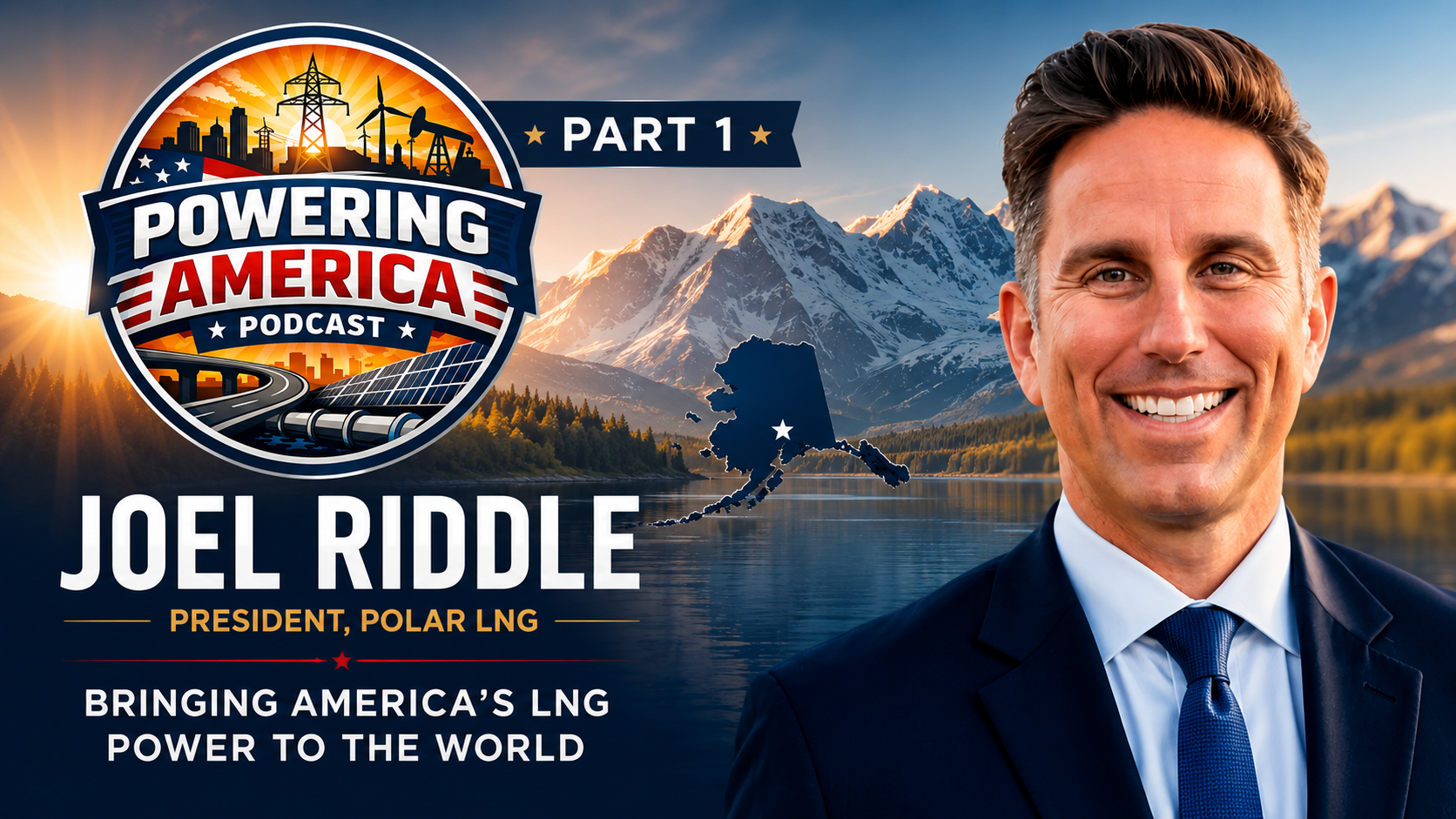
April 15, 2026 · Joel Riddle, Polar LNG
Polar LNG's role in U.S. energy security, with Joel Riddle
Polar LNG's Alaska project is aimed at U.S. energy security, says Joel Riddle, CEO of Polar LNG, in a Powering America Podcast interview. Riddle discusses Polar LNG's ambitious project in Alaska, which aims to produce 21 million tons of liquefied natural gas (LNG) annually by 2030. He highlights the project's potential to enhance U.S. energy security, especially in light of recent disruptions in global LNG supply, and emphasizes the importance of community support and infrastructure development in the North Slope region.