
2026-10-13 · Progressive Policy Institute
Diana Moss on How Corporate Monopolies Undermine Free-Market Competition
with Diana Moss, Vice president and Director of competition policy — Progressive Policy Institute
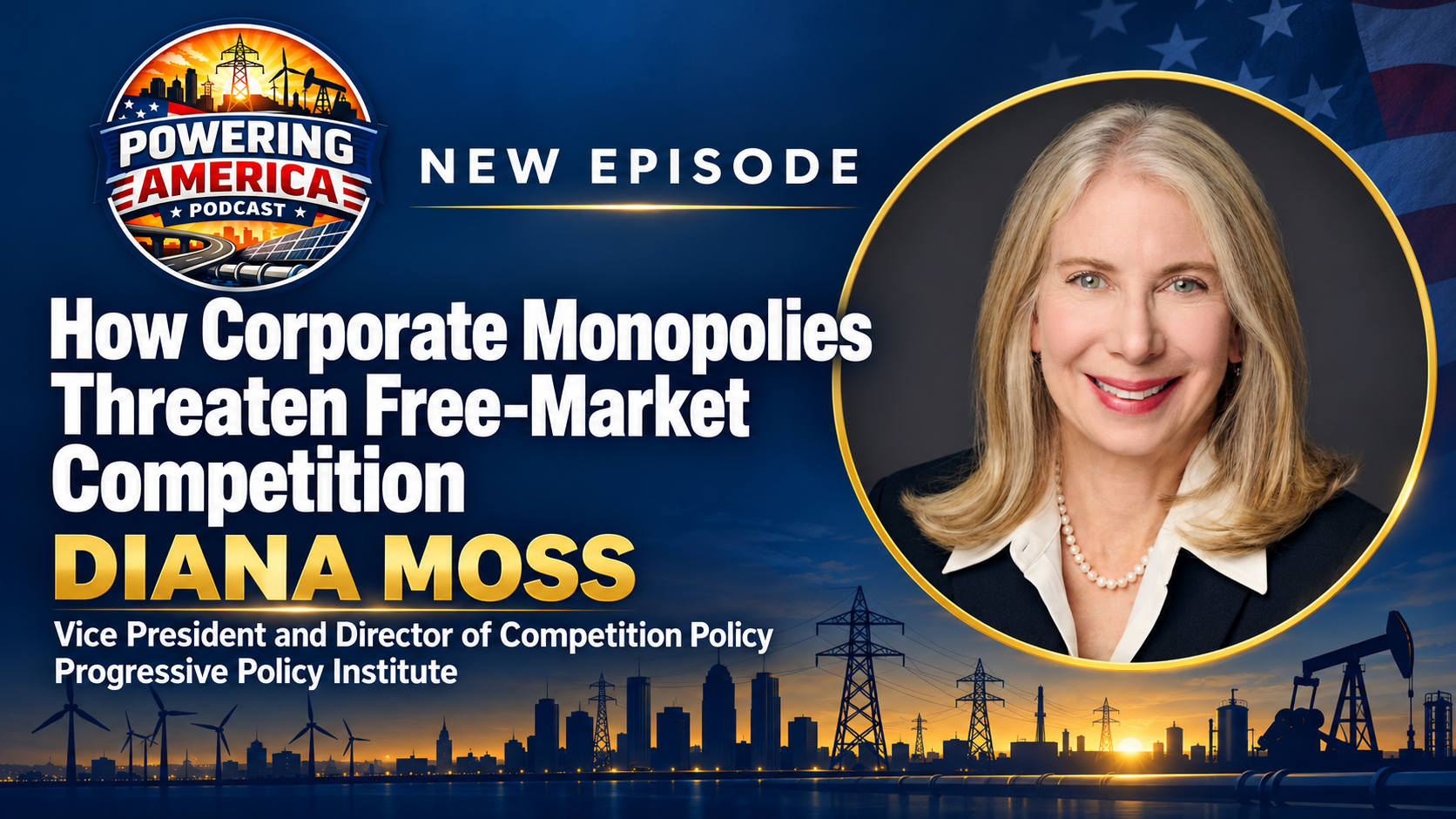
In the latest episode of the Powering America Podcast, host Bryan Hyde interviews Diana Moss, Vice President and Director of Competition Policy at the Progressive Policy Institute. Moss discusses the significance of U.S. antitrust laws, their historical context, and how corporate monopolies threaten free-market competition, particularly in light of recent political influences on enforcement practices. She emphasizes the need for vigorous antitrust enforcement to protect consumers and promote innovation.
Diana Moss: How Corporate Monopolies Threaten Free-Market Competition
Corporate Monopolies Threaten Free-Market Competition, Expert Says
Diana Moss, Vice President and Director of Competition Policy at the Progressive Policy Institute, discussed the implications of corporate monopolies on free-market competition during a recent episode of the "Powering America Podcast." Moss highlighted the historical context of U.S. antitrust laws and their role in protecting consumers and fostering competition.
The Sherman Antitrust Act, enacted in the late 19th century, was designed to combat monopolies and promote competition in the U.S. economy. Moss explained that the act addresses three main areas: monopolization by dominant firms, conspiracies to fix prices or allocate markets, and merger control to prevent anti-competitive consolidations. “These laws have been enforced variously with different levels of vigor over the years,” she said, noting that the Biden administration has seen a resurgence in antitrust enforcement compared to previous administrations.
Moss emphasized the importance of merger control in maintaining competitive markets. She described how the Department of Justice and the Federal Trade Commission actively monitor mergers that could lead to market dominance. “Active, vigorous antitrust enforcement is the best way to stop this kind of anti-competitive consolidation,” she said.
One historical example Moss cited was the breakup of AT&T in the 1980s. The company was deemed a monopolist that stifled competition in the telecommunications market. The government successfully brought a case against AT&T, leading to the creation of seven regional companies, known as the Baby Bells. This breakup resulted in lower prices and increased innovation in the telecommunications sector.
However, Moss warned that the politicization of antitrust laws poses significant risks. She pointed to the Trump administration's approach, which she described as using antitrust laws to advance a political agenda. An example she provided was the case against Live Nation and Ticketmaster. Although the Department of Justice had a strong case against the company for monopolistic practices, the White House intervened to settle the case, allowing the companies to remain integrated and potentially continue exercising market power.
Moss expressed concern over the broader implications of such interventions, stating that they jeopardize the rule of law and due process in antitrust enforcement. She noted that the current political climate has created a challenging environment for effective antitrust regulation.
The discussion also touched on the concept of regulatory capture, where regulated industries may seek to influence regulation to maintain their market power. Moss explained that this phenomenon can lead to a lack of genuine competition, as big firms may use lobbying efforts to shape policy outcomes in their favor.
As the conversation shifted to emerging technologies, Moss acknowledged that antitrust concerns are likely to arise in the rapidly growing artificial intelligence sector. She warned that the interconnected nature of AI, cloud providers, and data centers could lead to significant market concentration if not properly regulated. “It’s going to be a challenge for antitrust enforcement to stay on top of competition issues in AI,” she said.
Moss concluded by emphasizing the importance of robust antitrust enforcement to ensure fair competition and protect consumers. She reiterated that the antitrust laws are essential tools for preventing monopolistic behavior and promoting innovation in various sectors of the economy.
The full discussion with Diana Moss on the "Powering America Podcast" provides valuable insights into the complexities of antitrust enforcement and its critical role in maintaining a competitive marketplace.
Interview Q&A
Q&A: Diana Moss: How Corporate Monopolies Threaten Free-Market Competition
Powering America Podcast: Diana Moss on Corporate Monopolies and Antitrust
Q: Can you tell us about your role and the Progressive Policy Institute?
A: I work for the Progressive Policy Institute, a center-left nonprofit think tank. Our goal is to create pragmatic solutions for significant policy issues, including affordability and energy access. I am an economist with a focus on antitrust enforcement and regulation.
Q: What is the Sherman Antitrust Act, and why is it important?
A: The Sherman Antitrust Act, along with the Clayton Act, was created to promote competition and protect consumers, workers, and businesses. These laws address monopolies, price-fixing conspiracies, and merger control to prevent market concentration that harms competition.
Q: How do antitrust laws protect consumers?
A: Antitrust laws protect consumers by preventing mergers that create dominant firms and by addressing monopolization, where large firms can stifle competition. They also target conspiracies among firms that agree not to compete aggressively, which can lead to higher prices and reduced quality.
Q: Can you provide a historical example of antitrust enforcement?
A: A significant example is the breakup of AT&T in the 1980s. The government determined that AT&T was monopolizing the telecommunications market. The breakup led to the creation of the Baby Bells, which increased competition and lowered prices for consumers.
Q: What concerns do you have about the current state of antitrust enforcement?
A: We are in a concerning phase of antitrust enforcement, particularly under the Trump administration, where laws have been politicized. There have been instances where political agendas have influenced antitrust actions, such as the Live Nation Ticketmaster case, which resulted in a settlement that did not effectively promote competition.
Q: Does government intervention in markets create risks?
A: Yes, government intervention can lead to regulatory capture, where regulated firms seek to maintain their market power through regulation. This dynamic can undermine competition and harm consumers.
Q: How does lobbying affect antitrust policy?
A: Lobbying plays a significant role in shaping policy outcomes at both state and federal levels. Lawmakers often rely on information from lobbyists, which can influence their decisions regarding antitrust enforcement and regulation.
Q: Are there challenges in regulating emerging technologies like AI?
A: Yes, antitrust concerns in the AI sector are likely to grow as the industry expands. The interconnected nature of AI technologies and the potential for market consolidation present significant challenges for antitrust enforcement, which is typically slow to adapt.
Q: What is the current landscape of antitrust enforcement in the U.S.?
A: Antitrust enforcement has varied with political administrations. Historically, Democratic administrations have favored vigorous enforcement, while Republican administrations have been more hands-off. The current environment reflects a mix of these approaches, with concerns about politicization.
Q: How can consumers benefit from effective antitrust enforcement?
A: Effective antitrust enforcement leads to fair market prices, increased quality, and more variety for consumers. It promotes competition, which drives innovation and ultimately benefits consumers.
Q: What role does the Progressive Policy Institute play in competition policy?
A: The Progressive Policy Institute monitors competition issues and advocates for policies that promote fair markets. We emphasize the importance of antitrust enforcement and regulatory actions that benefit consumers and competition.
Q: What future challenges do you foresee in antitrust enforcement?
A: The rapid evolution of technology, particularly in AI, will pose challenges for antitrust enforcement. Keeping pace with market changes and preventing harmful consolidation will be critical in maintaining competitive markets.
Q: How can we ensure that antitrust laws serve their intended purpose?
A: Vigilant enforcement of antitrust laws, transparency in regulatory processes, and public awareness of competition issues are essential to ensure that these laws effectively protect consumers and promote fair competition.
Key takeaways
- “Active, vigorous antitrust enforcement is the best way to stop this kind of anti-competitive consolidation and conduct so that consumers can see fair, competitive market prices, lots of quality, lots of variety.”
- “We are gonna see AI... it's going to be a challenge for antitrust enforcement to stay on top of competition issues in AI to prevent lots of consolidation and concentration.”
- “Promoting competition through enforcement of the US antitrust laws is good for competition, good for consumers, good for innovation.”
- “Whenever you have a natural monopoly, single firm serving the market at very low cost... you do often get a very subtle background dynamic going where big regulated firms are actually seeking regulation that allows them to maintain their market power.”
- “The US antitrust laws were the first laws to support and promote competition in our market economy and to protect consumers and workers and businesses.”
About the guest

Vice president and Director of competition policy — Progressive Policy Institute
Diana Moss is an economist and Vice President and Director of Competition Policy at the Progressive Policy Institute. She specializes in antitrust enforcement, corporate consolidation, and competition across industries including energy, technology, agriculture, and healthcare. Previously, she served as president of the American Antitrust Institute from 2015 to 2023 and worked at the Federal Energy Regulatory Commission, coordinating merger analysis. She holds a Ph.D. from the Colorado School of Mines.
Full transcript
Show full transcriptHide transcript
Filed under