2026-06-04 · Powering America Podcast
SPECIAL BRIEFING: Can Texas avert the last flight of the Heartland Flyer?
with Bryan Hyde, Host — Powering America Podcast
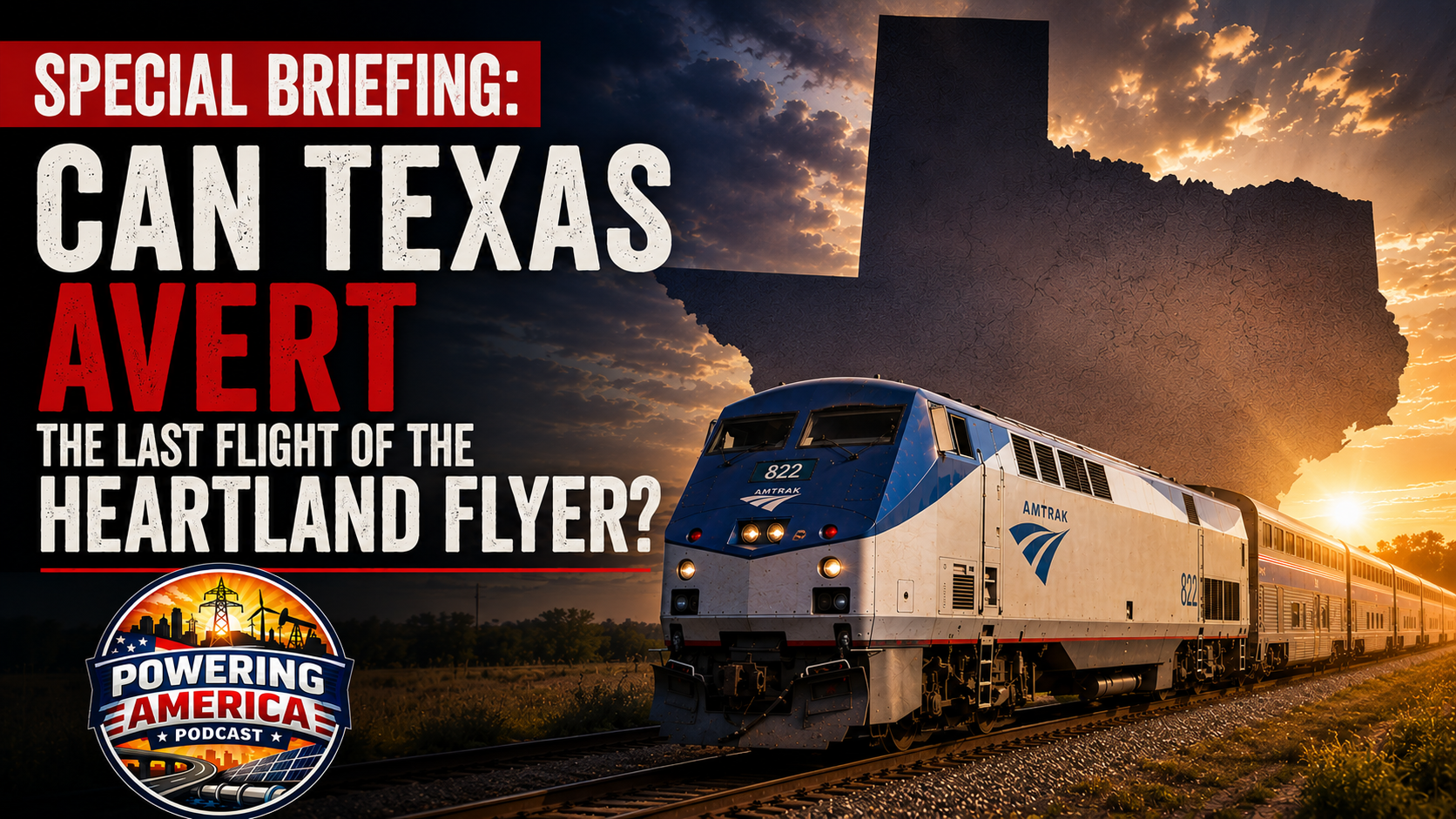
The Powering America Podcast episode discusses the future of the Heartland Flyer, an Amtrak train connecting Oklahoma City and Fort Worth, Texas. Despite achieving record ridership and revenue, the train faces potential shutdown due to Texas not securing funding in its budget. The episode highlights the significance of the Heartland Flyer as a vital transportation option for many residents and its role in events like the annual Red River Rivalry football game.
SPECIAL BRIEFING: Can Texas avert the last flight of the Heartland Flyer?’
Texas Faces Funding Decision for Heartland Flyer
Texas lawmakers face a critical decision regarding the future of the Heartland Flyer, a vital passenger rail service connecting Oklahoma City and Fort Worth, Texas. Despite experiencing record ridership and revenue, the train may cease operations after August 31 due to a lack of state funding.
The Heartland Flyer, operated by Amtrak, covers 206 miles and has been in service since 1999. It provides a crucial transportation option for many residents along the route, serving as the only passenger rail link between the two cities. In fiscal year 2025, the train carried 80,767 passengers and generated $2.4 million in ticket revenue, according to a recent report from Lone Star Standard.
Oklahoma has secured funding for its share of the operational costs through fiscal year 2027. However, the Texas legislature did not allocate funds for the Heartland Flyer in its budget for 2026-2027. The Texas Department of Transportation has informed Amtrak that no alternative funding sources have been identified, putting the service at risk.
The situation raises questions about the sustainability of transportation infrastructure in the United States. As travel demand increases, particularly during peak holiday seasons, many Americans are opting to travel by car. The recent Memorial Day weekend saw approximately 39 million Americans traveling by car, exacerbating traffic congestion and fuel costs. Gas prices have surged, with the average price reaching $4.56 per gallon, a four-year high.
The Heartland Flyer helps alleviate some of this congestion, removing an estimated 50,000 vehicles from Interstate 35 each year. Its potential shutdown could lead to increased traffic and fuel expenses for travelers, particularly those who rely on public transportation.
For many individuals, the Heartland Flyer is not merely a convenience but a necessity. According to an Oklahoma transportation official, the train serves those who cannot drive or afford airfare. The service is essential for seniors, students, and families who depend on affordable transportation options.
The Heartland Flyer also plays a significant role in regional events, such as the annual Red River Rivalry college football game between the University of Oklahoma and the University of Texas. Amtrak has historically extended the Heartland Flyer service for fans traveling to the game, providing an affordable and enjoyable way to attend. With the potential loss of the train, this tradition is now in jeopardy.
As of now, Oklahoma has fulfilled its funding obligations, while Texas has not. The deadline of August 31 looms, leaving the future of the Heartland Flyer uncertain. The situation highlights broader issues surrounding infrastructure funding and the importance of maintaining essential services, even when they are experiencing success.
The Heartland Flyer’s predicament serves as a microcosm of the challenges facing American infrastructure. As policymakers weigh the costs and benefits of funding, the implications extend beyond budget spreadsheets to the lives of individuals who rely on the service. The outcome of this funding decision will have lasting effects on transportation options in the region and could set a precedent for future infrastructure investments.
As the clock ticks down to the end of August, stakeholders and residents alike await a resolution that could determine whether the Heartland Flyer continues to serve its community or becomes a casualty of budgetary constraints.
Interview Q&A
Q&A: SPECIAL BRIEFING: Can Texas avert the last flight of the Heartland Flyer?’
Powering America Podcast: Special Briefing on the Heartland Flyer
Q: What is the Heartland Flyer?
A: The Heartland Flyer is an Amtrak train that operates one round trip daily between Oklahoma City and Fort Worth, Texas, covering 206 miles. It has been in operation since 1999.
Q: How many passengers did the Heartland Flyer carry in fiscal year 2025?
A: The Heartland Flyer carried a record 80,767 passengers in fiscal year 2025.
Q: What was the ticket revenue for the Heartland Flyer in fiscal year 2025?
A: The train generated a record $2.4 million in ticket revenue in fiscal year 2025.
Q: Why is the Heartland Flyer at risk of being shut down?
A: The Heartland Flyer is at risk of shutdown because Texas did not allocate funding for the train in its 2026-2027 budget. Oklahoma has secured its share of funding through fiscal year 2027.
Q: When does the Texas funding for the Heartland Flyer run out?
A: The Texas funding for the Heartland Flyer is set to run out on August 31.
Q: What is the significance of the Heartland Flyer for travelers?
A: The Heartland Flyer provides a vital transportation option for those who cannot drive or afford to fly. It serves as the only passenger rail link between Oklahoma City and Fort Worth.
Q: How does the Heartland Flyer impact traffic on Interstate 35?
A: The Heartland Flyer removes approximately 50,000 vehicles from Interstate 35 each year. If the train ceases operations, many of those trips would likely shift to the highway, increasing traffic congestion.
Q: What is the "Big Game Train"?
A: The "Big Game Train" is an extended service of the Heartland Flyer that transports fans from Oklahoma to the annual college football game between the University of Oklahoma and the University of Texas.
Q: What are the potential consequences of losing the Heartland Flyer?
A: Losing the Heartland Flyer would eliminate a key transportation option for many individuals, disrupt travel for college football fans, and increase traffic on Interstate 35.
Q: What does the situation with the Heartland Flyer illustrate about American infrastructure?
A: The situation highlights the complexities of funding infrastructure and how decisions at the state level can impact essential services, even when demand is high.
Q: Who is responsible for operating the Heartland Flyer?
A: Amtrak operates the Heartland Flyer, while funding is provided through a partnership between Oklahoma and Texas.
Q: What is the current status of the Heartland Flyer?
A: As of now, the Heartland Flyer is experiencing record ridership and revenue, but its future remains uncertain due to lack of funding from Texas, with a deadline approaching on August 31.
Key takeaways
- “The Heartland Flyer just had a record year, carrying a record eighty thousand seven hundred sixty-seven passengers.”
- “The irony writes itself. Demand has never been higher. The product is working, and the thing standing between this train and the tracks isn't ridership, it's an appropriation that didn't get made.”
- “For people who can't drive, can't afford to, or simply won't, if they want to take surface transportation down to the Fort Worth area, the Heartland Flyer is the one other choice they've got.”
- “Lose the train and a lot of those trips don't disappear, they just move onto the highway, into the traffic and the fuel bills.”
- “With Texas pulling its share of the money and the long-term future of the whole route in question, the Big Game Train is one of the things that could disappear.”
About the guest
Host — Powering America Podcast
Full transcript
Show full transcriptHide transcript
Filed under