2026-07-07 · Progressive Policy Institute
Neel Brown on Unlocking America's Advanced Recycling Potential Through Policy
with Neel Brown, Managing Director — Progressive Policy Institute
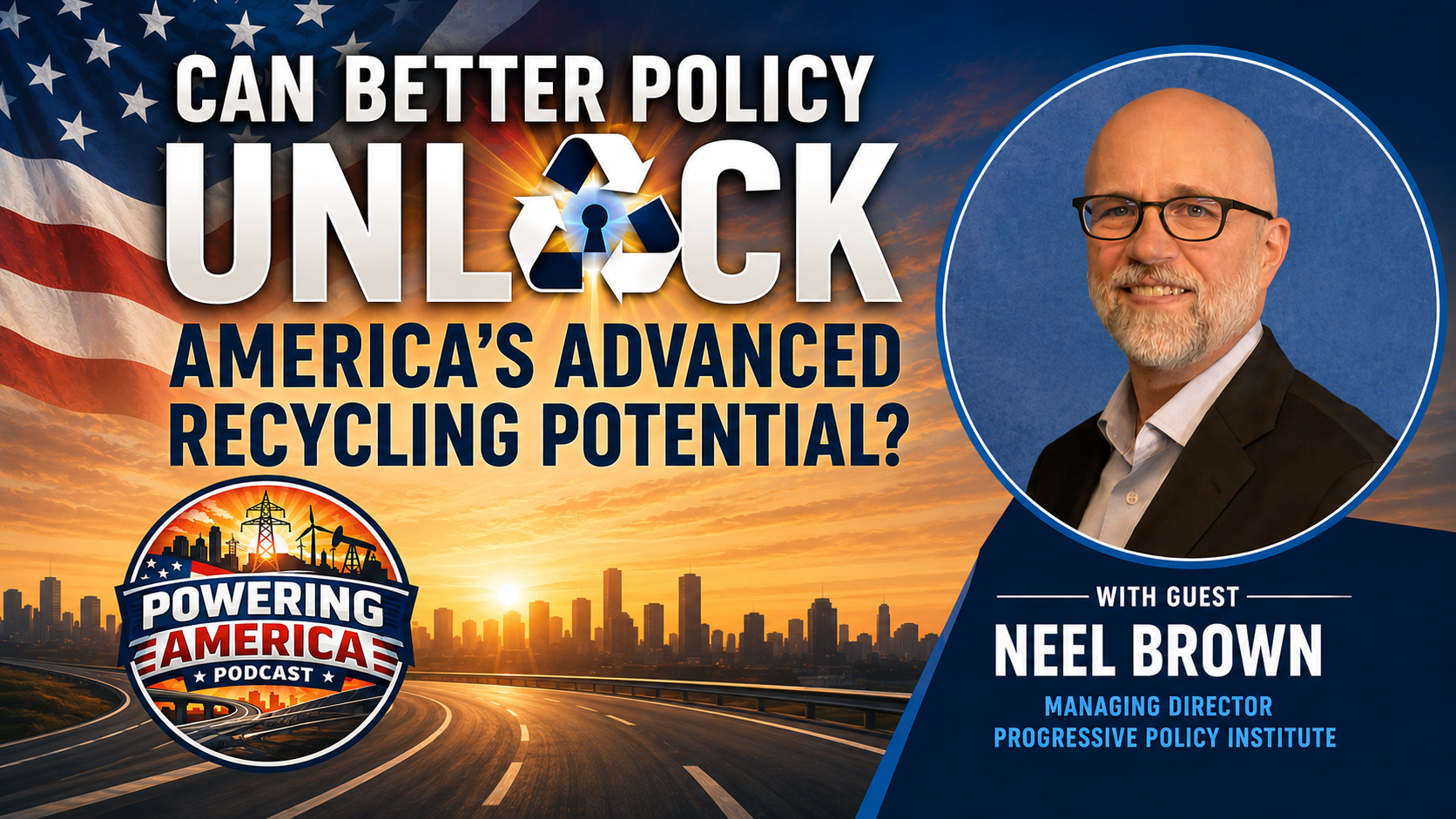
In the latest episode of the Powering America Podcast, Neel Brown, Managing Director of the Progressive Policy Institute, discusses the potential of advanced recycling to address America's plastic waste crisis. Brown explains how advanced recycling differs from traditional methods by breaking down contaminated plastics at a molecular level, allowing for the recycling of materials that are typically sent to landfills. He emphasizes the need for supportive policies and public awareness to enhance recycling rates and reduce landfill waste.
Neel Brown: Can better policy unlock America's advanced recycling potential?
Neel Brown Discusses Advanced Recycling and Policy Solutions to Plastic Waste
In a recent episode of the Powering America Podcast, Neel Brown, Managing Director of the Progressive Policy Institute, discussed the potential of advanced recycling technologies to address America's plastic waste crisis. The podcast, hosted by Bryan Hyde, aired on [insert date] and focused on the implications of advanced recycling for both the environment and economic policy.
Brown outlined the differences between traditional mechanical recycling and advanced recycling. Traditional recycling involves grinding up plastic products, melting them down, and reforming them into new items. However, this process has limitations, particularly when dealing with contaminated plastics, which often end up in landfills. Advanced recycling, on the other hand, breaks down plastics at a molecular level, allowing for the recycling of materials that mechanical methods cannot handle, such as contaminated plastics and complex packaging.
In the United States, approximately 35.7 million tons of plastic waste are generated annually, with 75.6% of that waste—around 27 million tons—ending up in landfills. Brown noted that the national recycling rate for plastics is about 9%, significantly lower than global averages. He emphasized the need for improved recycling methods to divert plastics from landfills and reduce environmental impact.
The economic implications of advanced recycling are also significant. Brown explained that municipalities face tipping fees for waste disposal, which can be substantial. For example, Harris County, Texas, could save approximately $21.6 million annually by diverting plastic waste from landfills. Los Angeles County could save between $2.9 million and $5.6 million per year. These savings could be reinvested into initiatives to boost recycling rates, such as public education campaigns or incentive programs.
Brown highlighted the importance of a supportive regulatory framework for advanced recycling. Currently, there is no universal definition of recycling in the U.S., leading to inconsistencies across states. A bipartisan federal bill has been proposed to establish a national standard for recycling definitions, which would help clarify the status of advanced recycling and encourage investment in the technology.
Despite the potential benefits, advanced recycling faces skepticism from environmental advocates who oppose plastics altogether. Brown argued that engaging with the oil and gas industry, which has expertise in managing plastic materials, could lead to innovative solutions for reducing plastic waste. He noted that many oil and gas professionals possess a deep understanding of the science behind plastic production and recycling.
Brown also addressed the public perception of plastics and the economic realities of alternatives. He warned that pushing for a complete ban on plastics could lead to higher costs for consumers, particularly for low-income families. He emphasized the need for practical policies that promote recycling while recognizing the essential role plastics play in everyday life.
In conclusion, Brown called for a collaborative approach involving policymakers, industry leaders, and the public to create a circular economy for plastics. By investing in advanced recycling technologies and implementing supportive policies, the U.S. can reduce plastic waste and its environmental impact while also benefiting economically.
The Powering America Podcast continues to explore critical issues surrounding energy and environmental policy, featuring insights from experts like Neel Brown.
Interview Q&A
Q&A: Neel Brown: Can better policy unlock America's advanced recycling potential?
Powering America Podcast: Neel Brown on Advanced Recycling
Q: Can you provide some background on yourself and your work?
A: I am Neel Brown, Managing Director of the Progressive Policy Institute, a center-left think tank in Washington, D.C. We focus on pragmatic solutions across various policy areas including energy, education, and defense. My background includes working on Capitol Hill and running a consulting firm for 15 years, primarily in communications and energy issues.
Q: What does advanced recycling encompass?
A: Advanced recycling differs from traditional mechanical recycling. Mechanical recycling involves grinding and melting plastics to create pellets for new products. Advanced recycling breaks down plastics at a molecular level, allowing for the recycling of materials that mechanical processes cannot handle, including contaminated plastics and certain types of plastic bags.
Q: What are the statistics regarding plastic waste in the U.S.?
A: The U.S. generates 35.7 million tons of plastic waste annually, with 75.6% ending up in landfills. The national recycling rate for plastics is around 9%, which is low compared to global standards.
Q: How expensive or difficult is the advanced recycling process?
A: Advanced recycling is an expensive but viable investment for refineries. The process is complex and requires significant capital, but it is economically justifiable. Policymakers play a critical role in determining the success of these technologies.
Q: What are the benefits of diverting plastic waste from landfills for municipalities?
A: Diverting plastic waste can save municipalities money on landfill tipping fees. For example, Harris County, Texas, could save $21.6 million annually, while Los Angeles County could save between $2.9 million and $5.6 million. These savings could be reinvested into improving recycling rates.
Q: What regulatory challenges do advanced recycling companies face?
A: There is currently no universal definition of recycling across states, which complicates investments in advanced recycling. A proposed bipartisan federal law aims to establish a consistent definition of recycling, including advanced recycling, to provide clarity for companies.
Q: How important is public education in the recycling process?
A: Public education is crucial for increasing recycling rates. States with low recycling rates often have a high concentration of oil refineries, which could benefit from advanced recycling processes. Educating the public about the ease and benefits of recycling can significantly improve participation.
Q: What are the economic implications of eliminating plastics?
A: Alternatives to plastics are often more expensive and energy-intensive. Eliminating plastics could lead to higher costs for consumers, particularly for working-class families. It's important to consider the economic impact of shifting away from plastics without viable alternatives.
Q: What role do oil and gas companies play in advanced recycling?
A: Oil and gas companies have the expertise and resources to develop advanced recycling technologies. Engaging these companies can help create profitable solutions for diverting plastic waste from landfills, benefiting both the environment and the economy.
Q: What potential does advanced recycling have in states with low recycling rates?
A: Advanced recycling could significantly increase recycling rates in states with low participation. For instance, Louisiana, which has a recycling rate of 5%, could see rates rise to 55% by implementing advanced recycling technologies.
Q: How can we create a circular economy for plastics?
A: The goal should be to develop policies that reduce plastic waste while maintaining the benefits of plastic products. By promoting advanced recycling, we can create a circular economy that minimizes landfill waste and maximizes the reuse of materials.
Q: What is the overall message regarding advanced recycling?
A: Advanced recycling offers a practical solution to the plastic waste problem. By investing in these technologies and creating supportive policies, we can reduce landfill waste and promote sustainable practices in plastic use.
Key takeaways
- “In the U.S., every year we create 35.7 million tons of plastic waste as a total. Of that, 75.6% ends up in landfills.”
- “Advanced recycling allows these manufacturers to use basically recycled material to make new products that wouldn't be able to be made with mechanical recycling.”
- “We can create the incentives for them to find ways to make profit in doing things like diverting this plastic from landfills.”
- “If we could have plastics that do all these great things for us, and those plastics are recycled, that seems like the best of both worlds.”
- “There's not a person listening to this podcast that doesn't— can't reach out with their hand right now and touch something plastic.”
About the guest
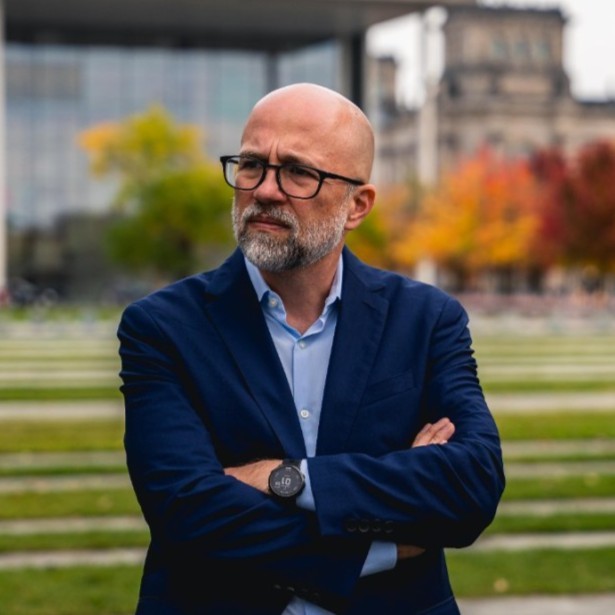
Managing Director — Progressive Policy Institute
Neel Brown is a Managing Director of the Progressive Policy Institute (PPI) in Washington, DC. Neel engages stakeholders and decision-makers to facilitate policy discussions around federal, state, local, and international issues. Alongside PPI’s Director of Energy and Climate Policy, Neel has helped build the Energy and Climate Solutions Initiative, which is widely respected and relied on by Members of Congress, Senators, and their staff for pragmatic proposals and solutions. Neel is deeply engaged in PPI’s international efforts, frequently engaging with policymakers and think tanks in Europe on energy issues and other policy and political topics. Before joining PPI, Neel was the President of Legis Media, an advocacy communications firm that he founded in 2004. He has extensive experience in advocacy advertising, grassroots organization, and coalition building. He spent over seven years working on Capitol Hill and political campaigns. Neel lives in Arlington, VA with his wife and daughter and spends his spare time playing the game of Go and performing in local bluegrass and country bands.
Full transcript
Show full transcriptHide transcript
Filed under