
2026-05-26 · Rio Grande Foundation
Paul Gessing on Data Centers and Energy Policy in New Mexico
with Paul Gessing, President, RIO GRANDE FOUNDATION — Rio Grande Foundation
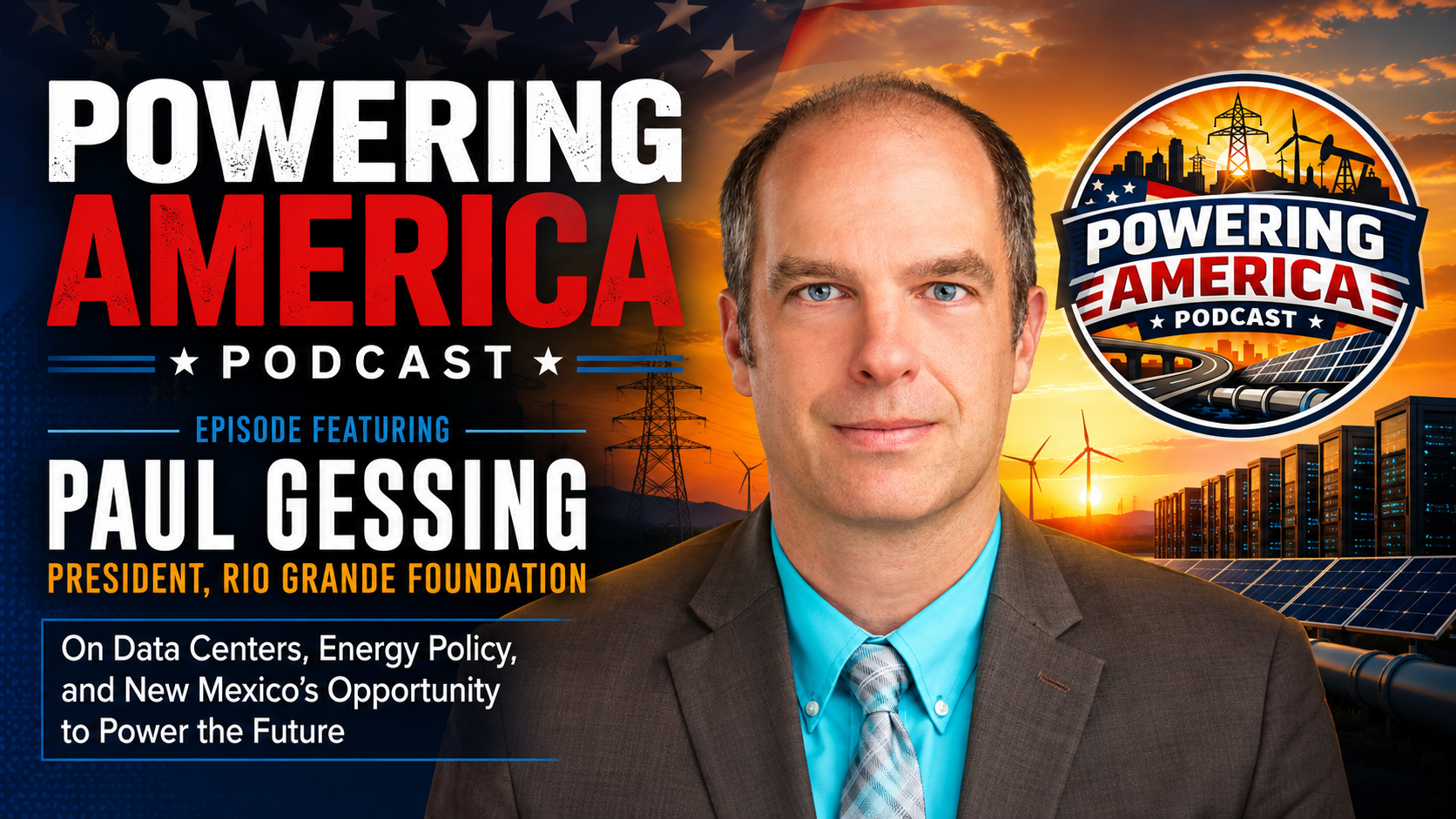
In the latest episode of the Powering America Podcast, Paul Gessing, president of the Rio Grande Foundation, discusses data centers and energy policy in New Mexico. Gessing highlights the state's potential for data center development due to its natural resources and stable environment, while also addressing the challenges posed by political opposition and environmental concerns. The conversation touches on the impact of energy policies, including the Energy Transition Act, and the role of water resources in supporting data center operations.
The Rio Grande Foundation’s Paul Gessing Discusses Data Centers and Energy Policy in New Mexico
Paul Gessing Discusses Data Centers and Energy Policy in New Mexico
In a recent episode of the Powering America Podcast, Paul Gessing, president of the Rio Grande Foundation, shared insights on the intersection of data centers and energy policy in New Mexico. Gessing, who has led the foundation for 20 years, discussed the state's potential for economic growth through data centers and the challenges posed by environmental regulations.
Gessing, originally from Ohio, moved to New Mexico in 2006 to establish the Rio Grande Foundation, the state’s first think tank. He noted that New Mexico, with its rich natural resources and favorable climate, has significant potential for economic development. "There is no state with more potential if we get our political house in order," he said.
Data Centers in New Mexico
Data centers, which require substantial amounts of electricity, have become a controversial topic in New Mexico. Gessing emphasized that while the Rio Grande Foundation supports free-market policies, the state's political landscape, dominated by Democrats, complicates matters. Governor Michelle Lujan Grisham has shown support for data centers, despite opposition from environmental groups within her party.
One of the most notable projects is Project Jupiter, an Oracle data center near Santa Teresa, close to the U.S.-Mexico border. Gessing highlighted that New Mexico's geographical stability—lacking earthquakes and severe weather—makes it an attractive location for such facilities. He stated, "New Mexico has a lot to offer for data centers," citing its energy resources and climate.
Energy Concerns
A primary concern surrounding data centers is their impact on energy costs for residents. Gessing pointed out that the state passed a microgrid bill in 2025, allowing data centers to operate independently from the main grid. This legislation aims to alleviate fears that data centers will drive up electricity prices for average citizens.
However, Gessing criticized the Energy Transition Act, which mandates a shift to renewable energy sources. He argued that if data centers were required to comply with this law, they would likely avoid New Mexico altogether. "The governor's support for both data centers and the Energy Transition Act creates a case of cognitive dissonance," he said.
Environmental Opposition
Environmental groups have voiced strong opposition to the expansion of data centers, often citing concerns over water usage and energy consumption. Gessing noted that while data centers are significant energy consumers, they can utilize produced water from oil and gas extraction processes, a solution opposed by many environmentalists.
He expressed frustration with the opposition from these groups, stating, "They just don't like economic development." Gessing believes that the concerns raised by environmentalists often overlook the potential benefits of data centers, including job creation and economic growth.
Future Prospects
Looking ahead, Gessing remains optimistic about the future of data centers in New Mexico. He believes that the state's unique resources and favorable conditions could attract more tech companies, provided that policymakers create a conducive environment for growth.
Gessing concluded by emphasizing the need for balanced discussions around energy policy and economic development. He encouraged those interested in the topic to visit the Rio Grande Foundation's website for more information on data centers and related issues.
For more details, visit riograndefoundation.org or errorsofenchantment.com.
Interview Q&A
Q&A: The Rio Grande Foundation’s Paul Gessing Discusses Data Centers and Energy Policy in New Mexico
Powering America Podcast: Q&A with Paul Gessing
Q: Can you tell us about your background and the Rio Grande Foundation?
A: I grew up in Ohio and spent eight and a half years in the Washington, D.C., area, primarily working at the National Taxpayers Union. I moved to Albuquerque in March 2006 to lead the Rio Grande Foundation, which focuses on state policy and think tank work in New Mexico.
Q: What is the current political landscape in New Mexico regarding energy policy?
A: New Mexico is predominantly a blue state, and the current political leadership, particularly Governor Michelle Lujan Grisham, has been resistant to free market policies. However, she has supported data centers, which has sparked controversy, especially among environmentalists.
Q: What are the main concerns regarding data centers in New Mexico?
A: The primary concern is their significant electricity consumption. While data centers can be beneficial for the economy, there is apprehension about their impact on energy costs and the environment. Environmentalists are particularly organized against them.
Q: Can you explain the role of microgrids in relation to data centers?
A: Microgrids are self-contained power units associated with data centers that operate independently from the main grid. This setup means that average citizens are not impacted by the energy consumption of data centers, alleviating concerns about rising electricity costs.
Q: What is the Energy Transition Act, and how does it affect data centers?
A: The Energy Transition Act aims to transition New Mexico to a grid powered primarily by wind and solar energy. I believe this law could deter data centers from coming to New Mexico, as it imposes restrictions that may not be compatible with their energy needs.
Q: How do data centers rely on uninterrupted electricity?
A: Data centers require a constant power supply because wind and solar are intermittent energy sources. While batteries can provide backup, they are expensive and may not meet the high electricity demands of data centers.
Q: Does New Mexico's scientific research landscape influence data centers?
A: While New Mexico is home to significant research institutions like Sandia Labs and Los Alamos, there is a challenge in translating sensitive research into commercial applications. The potential for nuclear energy as a future power source for data centers exists, but there is considerable opposition to nuclear energy in the state.
Q: What is the Rio Grande Foundation's stance on data centers?
A: The Rio Grande Foundation is generally supportive of data centers, recognizing the economic opportunities they present. However, we have concerns about the economic development incentives offered to them.
Q: How does water availability impact data centers in New Mexico?
A: Water is a significant factor for data centers in a desert state like New Mexico. The environmentalists often oppose solutions related to water use from the oil and gas industry, which could otherwise be utilized for data centers.
Q: What are the environmentalists' views on data centers?
A: Many environmental groups appear to oppose data centers entirely, as they often resist economic development that they perceive as harmful to the environment. Their focus tends to be on local issues rather than global environmental challenges.
Q: Where can people find more information about the Rio Grande Foundation?
A: People can access our website at riograndefoundation.org or errorsofenchantment.com for more information on this and other issues. We also have a podcast called Tipping Point New Mexico, where we discuss various topics, including the water issue.
Q: What is your outlook on the future of data centers in New Mexico?
A: The future of data centers in New Mexico will depend on how the political and environmental discussions evolve. We are committed to supporting policies that promote economic development while addressing environmental concerns.
Key takeaways
- “We have such an opportunity right now in multiple ways. The oil and gas revenue, we could be cutting taxes, doing all these things.”
- “The microgrid bill was genius, truly. It created a situation where they can have this reliable energy source right there associated with that data center.”
- “Data centers are big consumers of electricity. There's no getting around that.”
- “We are living in a desert, the high desert of the American Southwest, and water is a factor in the data centers.”
- “My experience with a lot of these radical environmental organizations is that they just don't like economic development.”
About the guest

President, RIO GRANDE FOUNDATION — Rio Grande Foundation
Paul Gessing is the president of the Rio Grande Foundation, a New Mexico-based free-market public policy organization focused on limited government, economic freedom, and individual responsibility. Gessing has led the organization since 2006 and is a frequent commentator on tax policy, energy, healthcare, education, and government transparency issues in New Mexico. He has written for numerous policy publications and media outlets and regularly appears in radio, podcast, and television interviews discussing state and national public policy issues.
Full transcript
Show full transcriptHide transcript
Filed under