2026-09-17 · Powering America Podcast
SPECIAL BRIEFING: Opposition grows to Union Pacific-Norfolk Southern rail merger
with Bryan Hyde, Host — Powering America Podcast
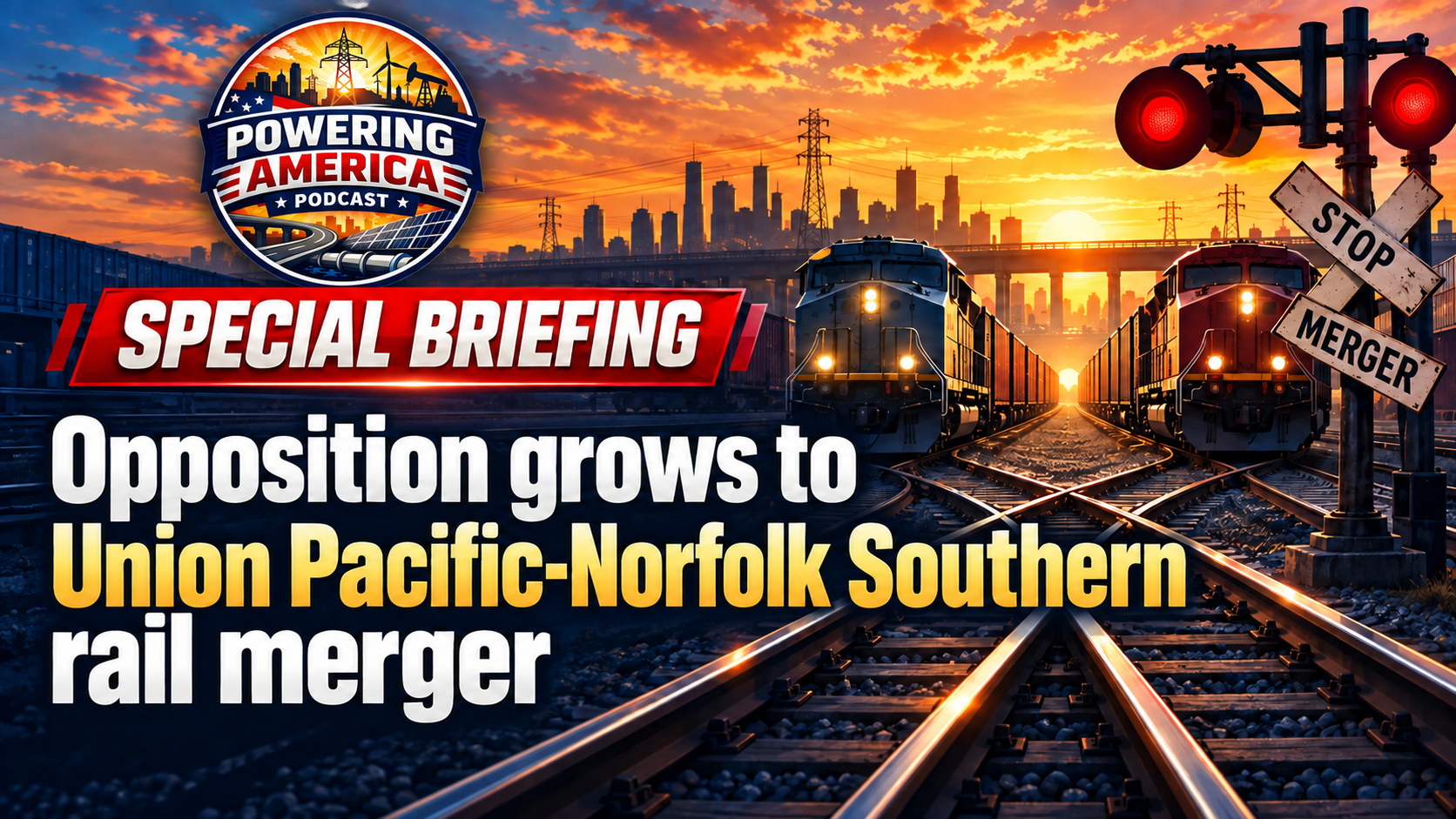
In a special briefing on the Powering America Podcast, host Bryan Hyde discusses growing opposition to the proposed $85 billion merger between Union Pacific and Norfolk Southern. Critics, including state attorneys general, agricultural organizations, and labor unions, argue the merger could reduce competition, increase shipping costs, and threaten jobs, while the companies claim it would enhance service and efficiency. The merger requires approval from the Federal Surface Transportation Board, which will assess its impact on competition and public interest.
SPECIAL BRIEFING: Opposition grows to Union Pacific-Norfolk Southern rail merger
Opposition Grows to Union Pacific-Norfolk Southern Rail Merger
Opposition is mounting against the proposed $85 billion merger between Union Pacific and Norfolk Southern, which would create the first coast-to-coast freight railroad in the United States. The merger has drawn criticism from various stakeholders, including state attorneys general, rail workers, agricultural organizations, and competing railroads, who argue that it could harm competition, increase shipping costs, and threaten jobs.
Union Pacific and Norfolk Southern contend that their merger would enhance service, eliminate delays, and open thousands of single-line shipping routes. They assert that a combined system would allow for more efficient freight movement across the country, reducing reliance on trucking. However, many opponents challenge these claims.
Concerns from Stakeholders
The proposed merger would unite Union Pacific's western network with Norfolk Southern's eastern system, resulting in over 50,000 miles of track across 43 states. Before the merger can proceed, it must be approved by the Federal Surface Transportation Board (STB), which requires that the transaction serve the public interest and enhance competition.
Opponents argue that the merger could diminish competition by limiting shippers' choices. They emphasize that competition exists not only between direct routes but also through the ability to choose which railroad will transport freight. A merger could reduce this bargaining power, leading to higher shipping costs.
The Stop the Rail Merger Coalition is a key player in the organized opposition. Its members include the Agricultural Retailers Association, the American Farm Bureau Federation, and several labor unions. Collectively, they represent a wide range of interests, all united against the merger. They argue that the combined railroad could control nearly half of American rail traffic, thereby reducing transportation options and undermining the national supply chain's resilience.
Legal Scrutiny
The merger has also attracted the attention of state attorneys general from seven states, including Montana, Iowa, and Kansas. They have urged the U.S. Department of Justice to scrutinize the proposal closely, arguing that it could harm competition and disrupt efficient rail service for American shippers. The attorneys general are particularly concerned about the impact on farmers and manufacturers who rely on rail transportation.
Texas Attorney General Ken Paxton's office has raised additional concerns, warning that the merger could lead to increased rates for shippers. Although Texas has not formally opposed the merger, its antitrust division cautioned regulators against approving a transaction that might disadvantage any group of shippers.
Agricultural Organizations Speak Out
Agricultural organizations are particularly vocal in their opposition. The National Grain and Feed Association has requested that the STB reject the merger, citing a lack of evidence that it would enhance competition. Many agricultural businesses depend on railroads for transporting large volumes of goods, and they fear that the merger could reduce their options and increase costs.
The United Sugar Producers and Refiners Cooperative has expressed specific concerns about how the merger could affect its operations. The cooperative, which distributes sugar across the U.S., warned that the merger could lead to increased transportation expenses and higher prices for consumer products.
Labor Unions Raise Alarm
Labor unions are also a significant part of the opposition. The Transportation Communications Union and IAM District 19 have joined the Stop the Rail Merger Coalition, voicing concerns about job security and workplace safety. They argue that rail consolidation has historically led to job losses and facility closures.
While some labor organizations support the merger due to commitments from Union Pacific aimed at protecting union jobs, opposing unions remain skeptical. They are calling for enforceable protections for workers, fearing that the merger could still lead to significant job disruptions.
Public Opinion and Regulatory Review
Public sentiment appears to be against the merger. A poll conducted by the Stop the Rail Merger Coalition revealed that 55% of likely voters initially opposed the merger, with that number rising to 71% after hearing additional information. Many respondents believe the merger would increase shipping costs and reduce competition.
As the STB reviews the merger, it will assess the companies' economic projections, operating plans, and the potential impact on rail competition. The growing opposition reflects a broader concern about the implications of further consolidation in an industry already dominated by a few major carriers.
The outcome of this merger review could significantly affect the future landscape of freight transportation in the United States. Stakeholders are urging regulators to apply the highest standards in their evaluation, emphasizing the need to understand who stands to benefit and who might bear the costs of this significant transaction.
Interview Q&A
Q&A: SPECIAL BRIEFING: Opposition grows to Union Pacific-Norfolk Southern rail merger
Opposition Grows to Union Pacific-Norfolk Southern Rail Merger
Q: What is the proposed merger between Union Pacific and Norfolk Southern?
A: The proposed merger is an approximately $85 billion transaction that would create America's first coast-to-coast freight railroad.
Q: What do Union Pacific and Norfolk Southern claim about the benefits of the merger?
A: They argue that a combined system would improve service, eliminate delays, open thousands of single-line shipping routes, and move more freight from highways to rail.
Q: Who is opposing the merger and what are their main concerns?
A: Opposition includes state attorneys general, rail workers, agricultural organizations, manufacturers, freight customers, and competing railroads. They warn that the merger could reduce competition, increase shipping costs, threaten jobs, and limit transportation choices.
Q: How would the merger affect the rail networks of Union Pacific and Norfolk Southern?
A: The merger would unite Union Pacific's western network with Norfolk Southern's eastern system, creating a system that operates over 50,000 miles of track across 43 states.
Q: What regulatory body must approve the merger?
A: The merger must be approved by the Federal Surface Transportation Board (STB).
Q: What is the standard that the STB requires for major railroad mergers?
A: The STB requires that applicants demonstrate the transaction would serve the public interest and enhance competition, not just preserve existing competition.
Q: What is the Stop the Rail Merger Coalition?
A: The coalition is an organized group opposing the merger, comprising 13 organizations representing agriculture, manufacturing, chemicals, transportation, freight customers, railroads, and organized labor.
Q: What specific concerns do state attorneys general have regarding the merger?
A: Attorneys general from several states have expressed concerns that the merger is unnecessary and could undermine competitive rail service, particularly for farmers and manufacturers who depend on rail transportation.
Q: What are some examples of organizations that oppose the merger?
A: Opposing organizations include the National Grain and Feed Association, the Ohio Agribusiness Association, and various labor unions representing railroad workers.
Q: How could the merger impact agricultural businesses?
A: Agricultural businesses may face reduced competition and increased transportation costs, which could ultimately affect prices for consumers.
Q: What is the public opinion regarding the merger?
A: A poll indicated that 55% of likely voters opposed the merger initially, which increased to 71% opposition after hearing more information about it.
Q: What are the potential implications for railroad workers?
A: Labor unions have raised concerns about job security, workplace safety, and potential job losses due to consolidation. They seek enforceable protections for workers.
Q: What is the main question regulators must consider regarding the merger?
A: Regulators must determine whether the merger would create more meaningful competition or give one company too much power over the movement of goods in the U.S.
Key takeaways
- “Opposition is growing to the proposed merger of Union Pacific and Norfolk Southern, an approximately $85 billion transaction that would create America's first coast-to-coast freight railroad.”
- “Opponents fear that combining Union Pacific and Norfolk Southern would reduce those options and give the merged railroad greater control over rates and service.”
- “Public opinion may present another challenge for the two railroads, with 55% of likely midterm election voters initially opposed to the merger.”
- “State attorneys general, rail workers, agricultural organizations, manufacturers, freight customers, and competing railroads warned that the merger could reduce competition, increase shipping costs, threaten jobs, and leave American businesses with fewer transportation choices.”
- “The coalition argues that the transaction would give one railroad control over nearly half of American rail traffic, reduce transportation choices, and weaken the resilience of the national supply chain.”
About the guest
Host — Powering America Podcast
Full transcript
Show full transcriptHide transcript
Filed under