2026-05-12 · Taxpayers Protection Alliance
Debunking Data Center Myths with Ross Marchand of Taxpayers Protection Alliance
with Ross Marchand, Executive Director, Taxpayers Protection Alliance — Taxpayers Protection Alliance
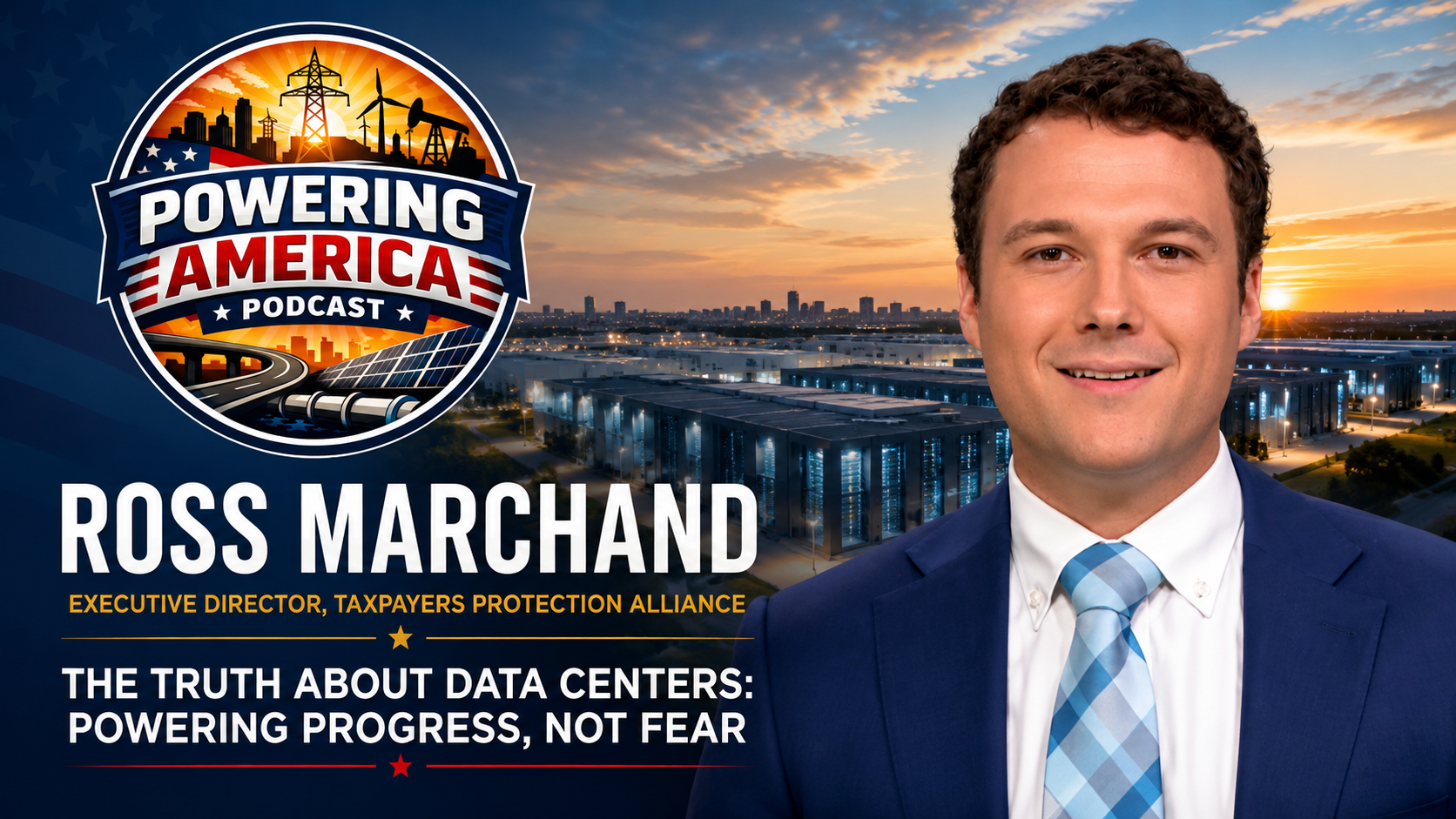
In the latest episode of the Powering America Podcast, host Brian Hyde interviews Ross Marchand, Executive Director of the Taxpayers Protection Alliance. They discuss common myths surrounding data centers, including their energy and water consumption, and the implications for local economies and policies. Marchand emphasizes the importance of data centers for technological advancement and economic growth while addressing public concerns and regulatory challenges.
Debunking Myths About Data Centers with Taxpayers Protection Alliance’s Ross Marchand
Data Centers: Myths and Realities Explored by Taxpayers Protection Alliance
In a recent episode of the Powering America Podcast, Ross Marchand, Executive Director of the Taxpayers Protection Alliance (TPA), discussed the complexities surrounding data centers and the misconceptions that often accompany them. The conversation, hosted by Brian Hyde, emphasized the importance of data centers in the digital economy while addressing concerns about their environmental impact and regulatory challenges.
Marchand explained that data centers are crucial for supporting the digital ecosystem, which includes everything from internet connectivity to artificial intelligence applications. "Data centers are essential for powering that," he said, highlighting their role in modern life. As the internet has become increasingly indispensable over the past few decades, the infrastructure provided by data centers has become more vital.
Despite their importance, data centers face significant backlash, particularly from local and state policymakers who may not fully understand their operations. Marchand pointed out that many of the fears surrounding data centers stem from misconceptions about their resource consumption. Common concerns include the belief that data centers consume excessive amounts of electricity and water, diverting these resources from residential and commercial needs.
Marchand countered these claims by providing context. He noted that data centers account for less than 5% of national electricity use, a figure that is often overshadowed by alarming statistics presented by opponents. He also cited studies from reputable institutions, such as the Berkeley Laboratory, which indicate that data centers do not necessarily drive up electricity prices. In fact, states like North Dakota, which have embraced data center development, have seen muted electricity price increases compared to the national average.
The discussion also touched on the regulatory environment surrounding data centers. Marchand criticized states like Maine, which have enacted bans on new data center construction, arguing that such measures stem from a misunderstanding of the technology. He emphasized that data centers are often unfairly singled out while other industries, such as hotels and golf courses, face fewer restrictions despite their comparable resource use.
Marchand also addressed the potential for self-powered data centers, particularly in states like West Virginia, where operators can create their own energy infrastructure. This approach could alleviate concerns about grid reliance and resource consumption. He noted that various energy sources, including geothermal, hydro, and even small modular nuclear, could be utilized to power these facilities.
The conversation highlighted the broader implications of data center development, particularly in relation to advancements in artificial intelligence. Marchand argued that the infrastructure provided by data centers is essential for harnessing the full potential of AI, which can lead to significant benefits across various sectors, including healthcare.
As policymakers grapple with the challenges posed by data centers, Marchand urged for a more informed and balanced approach. He pointed out that public concerns must be addressed through education and transparent communication. "Unless we address the public's concerns, that's a major cost," he said, emphasizing the need for myth-busting and fact-sharing.
For those seeking reliable information on data centers and their implications, Marchand recommended visiting the TPA's website at protectingtaxpayers.org. The organization aims to provide comprehensive coverage of the issues surrounding data centers and their role in the economy.
As the discussion concluded, Marchand acknowledged the competitive landscape in which the United States operates, particularly in relation to countries like China. He expressed concern that regulatory hurdles in the U.S. could hinder technological advancement and economic growth, urging for a more streamlined and supportive regulatory framework.
The episode serves as a reminder of the critical role data centers play in the modern economy and the importance of informed dialogue in addressing the challenges they face.
Interview Q&A
Q&A: Debunking Myths About Data Centers with Taxpayers Protection Alliance’s Ross Marchand
Debunking Myths About Data Centers: A Q&A with Ross Marchand
Q: What is your background and what does the Taxpayers Protection Alliance do?
A: I am the executive director of the Taxpayers Protection Alliance. Our organization holds government accountable and ensures bureaucrats are honest, especially regarding rising energy and electricity prices due to various policies.
Q: What are data centers and their role in the digital ecosystem?
A: Data centers facilitate the entire digital ecosystem. They are essential for powering the internet and supporting modern economic activities, regardless of whether artificial intelligence (AI) is used.
Q: How have data centers contributed to technological advancements?
A: Over the past few decades, the internet has become indispensable. Data centers support the infrastructure necessary for internet connectivity, which is crucial for both personal and professional activities.
Q: What are some common concerns about data centers?
A: Two major concerns are that data centers consume excessive electricity and water, potentially depriving communities of these resources.
Q: How do you respond to concerns about electricity and water consumption by data centers?
A: It's important to consider context. Data centers use less than 5% of national electricity. Other industries, like hotels and golf courses, often consume more water than data centers, yet these comparisons are rarely made.
Q: What measures have states taken to discourage data centers?
A: Some states, like Maine, have implemented bans on new data centers. Others impose strict regulations, such as requiring water offsets, which unfairly target data centers compared to other industries.
Q: Can data centers be self-powered?
A: Yes, states like West Virginia are exploring options for data centers to create their own power generation infrastructure, which could alleviate concerns about reliance on the grid.
Q: What energy sources are being considered for self-powered data centers?
A: Data centers are looking into various energy sources, including geothermal, hydro, and small modular nuclear energy, as long as policies allow for diverse options.
Q: Who benefits from data centers beyond the companies that operate them?
A: A wide range of sectors benefits from data centers, including healthcare, where AI applications can aid in drug discovery and improve patient outcomes.
Q: Where can people find reliable information about data centers?
A: A good starting point is the Taxpayers Protection Alliance website, protectingtaxpayers.org, which covers various aspects of data centers.
Q: How are data centers perceived politically?
A: There are mixed political trends. While some state and local governments impose regulations that hinder data centers, there are efforts at the federal level to establish a more streamlined regulatory framework.
Q: What lessons can the U.S. learn from other countries regarding data centers?
A: Other countries often make power generation easier and more accessible, which enhances the efficiency of AI services. The U.S. could benefit from liberalizing power generation regulations.
Q: What are some trade-offs associated with accommodating data centers?
A: One major trade-off is addressing public concerns. If these concerns remain unresolved, they can lead to significant costs, so it’s crucial to provide accurate information to the public.
Q: What is the website again for more information?
A: The website is protectingtaxpayers.org.
Key takeaways
- “Data centers are essential for powering the whole digital ecosystem.”
- “The problem is, state and local policy especially, but also federal policy have just not kept pace with these technological advancements.”
- “Data centers are the big scary thing that everyone is talking about.”
- “There are so many technological advancements and thresholds where it's really hard to see the other side.”
- “Unless we address the public's concerns, that's a big way that we address those costs and we keep those costs at a minimum.”
About the guest

Executive Director, Taxpayers Protection Alliance — Taxpayers Protection Alliance
Ross Marchand is Executive Director of Taxpayers Protection Alliance. Ross is an alumnus of the Mercatus Center MA Fellowship at George Mason University and a graduate of the University of Virginia School of Law. He has worked on a variety of legal matters, including the Alaska-Hawaiian airline merger and the United States Postal Service v. Konan Supreme Court case. He has also authored policy briefs on a variety of issues, including multiple analyses on the legal and policy issues facing the Food and Drug Administration. His work has appeared in numerous publications including The Wall Street Journal, National Review, Forbes, The Denver Post, and the Washington Examiner.
Full transcript
Show full transcriptHide transcript
Filed under