Show full transcriptHide transcript
PAP Apr 30 Wayne Winegarden
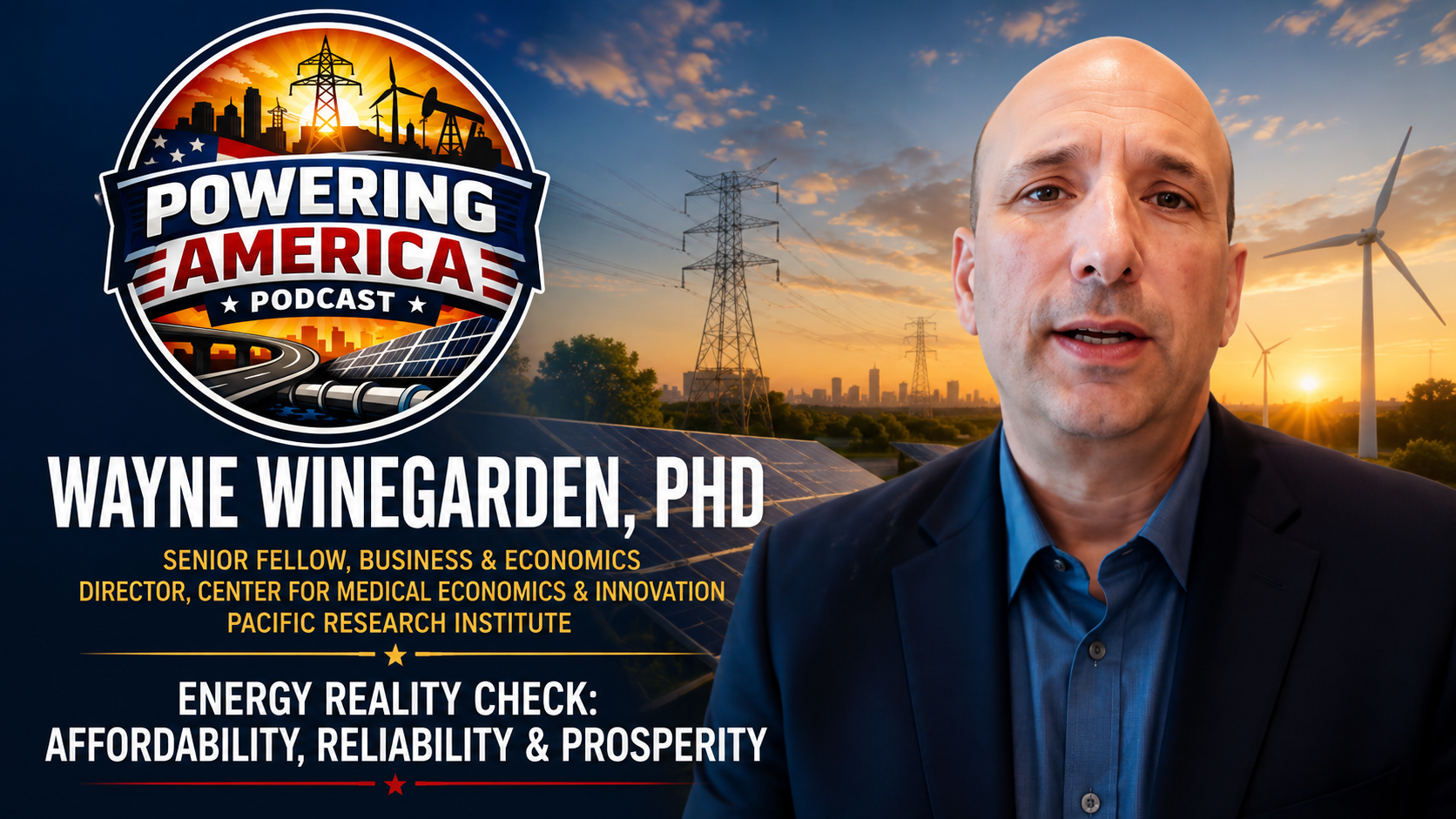
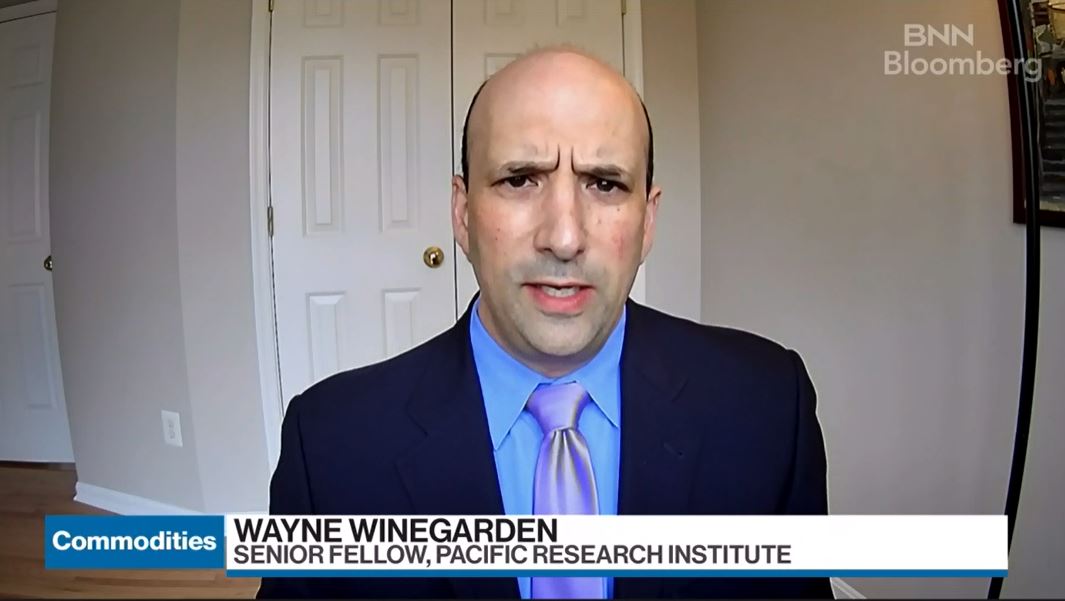
[00:00:00] Welcome to the Powering America Podcast. I'm Brian Hyde. Today I'm joined by Wayne Winegarten. Wayne is with the Pacific Research Institute. In fact, you're a senior fellow in Business and Economics and Director of the Center for Medical Economics and Innovation, and I've probably left out a few things here.
Wayne, tell us a little bit about who you are and what you do. Absolutely. It's, uh, great to be here, uh, with you, Brian. Uh, so as you said, you know, I'm a senior fellow with the Pacific Research Institute, uh, professional economist, uh, PhD, uh, for, we won't say how long ago it, it'll age me. Um, but I, I, I cover a number of issues for PRI all, you know, economic.
Being the common theme throughout. But one of the things that's, uh, really important to me, and certainly for California and it's incredibly important, is energy. And so I say healthcare also one of my passions, but energy is as well, just because without affordable energy, you don't have. Prosperity. You know, without affordable [00:01:00] energy you don't have growth.
And there's a lot of misnumbers in all sorts of ways when it comes to kind of what is a reliable kind of affordable energy system and how do we get there? And so really tried to. Focus my research kind of directly at, at, at, at those questions about how can we develop the, the best and most affordable energy system while ideally, you know, having the fewest emissions possible.
You know, I think for a lot of people for whom this was just kind of an academic thing even a couple of years ago, um, they're starting to pay attention and it's because their pocketbooks are, are starting to hurt every time they go to fill up their car every time they go to the store. And, hey, things are more expensive and, and, uh, we're starting to learn the, the connectivity of.
And the cost of energy and, and the cost of everything else in our lives. Talk to me about, uh, in the simplest terms, what is driving our, our cost of energy so high at this point? I is, is there a number of different factors that are contributing to this? Well, there's always a number [00:02:00] of different factors.
You know, life, life is complex and you can't, you gonna boil it down to one. Uh, in California though, you have. Policy, and it's a whole suite of policies that are just pushing us, you know, in a, a direction that makes energy less affordable and makes it less reliable, and that has consequences. Uh, and so, you know, from an economist perspective, you're always looking at, well, what's, what's the benefit from those policies versus what's the cost of those policies?
And I think any kinda rational. Look at kind of the benefits versus the costs. You have to be concerned about where we are. So obviously that could the Iran war, getting to gas, not necessarily electricity, but the Iran War has increased gas costs across the country, and that's a real issue. But you have to ask yourself, why is the rest of the country screaming?
Because gas is at $4 and 30 cents a gallon. When those of us in California, we, we, we would be ecstatic if you could have $4 and 30 cent, [00:03:00] uh, gas we're, you know, $6 or higher. Um, and that is the policy impact. And that's why when you have that for gas, but you have that for electricity, you have that for natural gas.
And like you said, this is pervasive. Across kind of our economy, across our uses, you know, so when those costs go up, the cost for everything else goes up too. Let's talk a little bit about coal too, because I, I know coal has kind of been seen as a dirty word, uh, when it comes to energy because, and I use the word dirty, you know, as, as kind of a double meaning here.
Uh, there's concern. Was it clean energy? Well, if we're burning coal, how could that possibly be clean? But coal still plays a very, um, prominent role in, in keeping the world running today, doesn't it? It does. And one of the ironic things about coal is because coal is, is widely available and it's efficient in terms of generating energy, the, the negative about coal is it is the highest emission, uh, resource.
Right? You are gonna get a lot more GHG greenhouse gas emissions when you use coal [00:04:00] versus, you know, o other resources. The problem though is if you don't build an affordable and reliable system, what ends up happening is you end up relying not just on coal, but maybe oil or other types of much dirtier fuels.
And that's why you have to be realistic about how do you, how do you structure your grid? You saw that in Germany. For instance, when, when you had the whole war between Russia and Ukraine and natural gas supplies were down and alternative energy wasn't generating enough and, and what did you see? All of a sudden coal started ramping up and so you started seeing emissions started rising, uh, in Germany because of the, the need to use more coal.
And so you need to actually work it into the system in a way that makes sense in order so you don't have to become. Over reliant on it later on, and we actually see that in the US too, where when it gets very cold out. Right, and people use a lot more energy. Although the, the structure of the system becomes really important in having the, [00:05:00] the wide availability, availability of resources is important in order to ensure we have the right energy kind of at that right moment.
And I think that's a key issue that people don't understand that electricity isn't the same good every second of every day because providing that electricity at different times requires different, uh, trade off, let's say. But the bottom line is when you push up the, uh, the, uh, temperature on your, uh, thermometer, you want the house to all of a sudden get warmer.
When you put on the light switch, you want the lights to come on. So you need that electricity. They're dispatchable at that moment, and that's a key aspect that when you are creating the grid, you have to always remember. I'm looking at a piece that you've written for real clear energy. This was published in early April.
Starving coal of capital puts the power grid at risk. I think you've just described some of the ways that the, the power grid sometimes gets stressed, depending on, you know, demand a [00:06:00] harsh winter is a good way of doing that. Talk to me about the role that coal plays in, in keeping the power grid going.
You know, at least here in America or here in California. Um, again, I know there's the push toward clean energy, but is is coal something that we, we can't yet. You know, step away from. No, um, no, we can't step away from it. I mean, I, ideally we wanna keep working towards a lower emission, uh, you know, uh, system.
Uh, undoubtedly that's important, but we have to do it realistically. So, uh, what, what the piece was talking about is we use example from, what was it? Uh, winter term fern, which was in the southeast of the country and it got very cold and all of a sudden coal, which usually is about, I think 16, 17% of the energy.
Uh, uh, provider in the energy source in those regions, it, it jumped up to 21% and it jumped up because that was the only dispatchable source that was available at that moment. To keep the lights on. To keep [00:07:00] the heat on. And that's kind of the key issue, which is where coal still has a tremendous amount of value, is that, uh, you need your electric grid to be dispatchable.
And there's traditional fossil fuels and nuclear as well, uh, are what they call a dispatchable sources, which means you, you know, they, they're there when you need it. If you need to ramp it up, you can ramp it up. If you need to ramp it down, you can ramp it down. Uh, alternative energy, solar, wind. Do not have the capacity in the same way.
I mean, there's developments with battery energy storage systems, which are trying to overcome that. Uh, those issues. There are a lot of concerns about that though, and living not far from lost landing battery fires being, being one of those. But, uh, they still, even in their best, uh, times, don't provide the same type of dispatchability.
That coal, uh, does that natural gas does that? Nuclear does. Uh, and so that's why it's still that the, [00:08:00] all of the above strategy, that polls very well. Why? Because there are times when you actually need all of those resources, and that may evolve. Our technology's getting better, you know, a couple of decades ago.
Before the fracking revolution, natural gas was a, a minor player and coal was a, the major provider. Because of the fracking revolution, though, we're able to mu rely much more on natural gas major advantages. It cut our emissions and that's a very good thing. Um, but again, it's how do you balance it out?
And whether we want to like it or not, doesn't matter. In the current situation, coal still has value in ensuring the stability of the grid. Talk to me about, uh, the future of coal and, and how, uh, the, the growing, you know, litigation over capital access is, is affecting coal's future. Uh. I mean, so it is been very politicized.
And what the piece that you referenced to what I was talking about is that you actually, you, you, obviously coal has [00:09:00] been attacked by, uh, environmentalists because it is the, the source with the most greenhouse gas, uh, emissions, and that is certainly disconcerting in some. Ideally, we wanna minimize. Uh, the use of coal to the extent that, you know, uh, we can, because that will help with the emissions issue.
And so that's been a problem. Um, you also had a move, uh, part, all part of the environmental, social and governance investing, ESG. Uh, and so you had some prominent investors who were, uh, ba. Making arguments that were against calls of interest, I guess would be the easiest way to, to summarize that. And so now what you have is you have, uh, attorneys general, many of them, uh, republicans who are trying to sue, um, uh, over this idea of kind of these companies being involved, uh, as ownership of coal companies, but then are they against coal's interest?
And so there's all of this drama about it, but, uh, the, the ultimate problem is what that's really doing is. It's [00:10:00] pushing investors out of holding coal, uh, investments, coal stock, you know, being investors in those companies. And by doing that, you're denying those companies of capital. Uh, and so the, the, you know, these lawsuits, which it, it's ironic, right?
The lawsuits are being filed. Because, uh, you know, allegedly these investors are pushing ESG ideas, which are detriment to coal. So we're gonna sue you because, you know, we don't like it being detriment to coal. But, um, what you're gonna do is you're gonna harm those companies. So it's, it's, it's really kind of an ironic, uh, kind of lawsuit that the, these ags are filing.
But more important than irony beyond just the deliciousness of, you know, irony is, is the fact that it's. It, it, it's harmful kind of to those companies, is gonna prevent them from being, having the capital they need. And to the extent that we still rely on coal and whether we like it or not, we do, uh, you, you can make those kind of the, the ability for them to expand their operations or [00:11:00] maintain their operations that much more difficult, which are also making difficult.
And some people would say this is a fantasy, but there are still those who hope that. Coal's emissions can be cleaned up. You know that clean coal is not a fantasy. Now this is what makes a market. Some people say it is, some people say it isn't. The idea though, would be that coal companies could have the capital for people who think it could be and try it out.
I mean, that's that, you know, that's the beauty of capitalism that. People can experiment and if they fail, suffer the failure. If they succeed, you know, enjoy it. Um, and, and so the opportunities to have those types of innovations, uh, go away when you deny these companies, uh, access to that capital. So whether it's just being an interim source until we can find ways around needing coal, whether it can become a.
Part of the the future because they can clean up the, uh, uh, greenhouse gas emissions. Who knows? But providing capital to them or allowing capital to [00:12:00] freely go there if people believe in it, is the best way to find the answer to it. Lawsuits and kind of mandates are just gonna work against getting to that, that more ideal solution.
Wayne, you, you mostly answered the question I wanted to ask about. You know, is there such a thing as, you know, can, can we, can we have clean burning coal? I know that there've been some great advances, uh, for instance in, in scrubbers for the smoke stacks of coal-fired power plants and so forth. I get this feeling though, that we're, we're.
Being offered, um, almost a, a, a dilemma. We're on the horns of a dilemma in the sense that, um, yes, we want, you know, clean, you know, non-G greenhouse gas creating energy, but it sounds like, uh, coal is being kicked to the curb prematurely as, as, uh, you know, people go after those other sources when, when coal could still be filling those needs.
Um, albeit to, you know, we're still looking for solutions that are cleaner and better. You know, that may eventually replace it entirely. Right. Right. And, and that's the key. It may replace it entirely, in which case, [00:13:00] fantastic. If, if that source is viable, affordable, and reliable. And that's, that's the key is that we, we, we focus only on one aspect, and this is a multidimensional issue, we're focus on kind of greenhouse gas emissions.
Um, and that's important. But remember, our greenhouse gas emissions have been going down for many years and they've been going down because of natural gas. For a large extent. Uh, so if coal can kind of become part of that, that's valuable. If it can't, then it's a impact on affordability and reliability.
As long as that's positive, then it, it, it still gonna have, or it should, it still should have. A role within the electric grid. The, I mean, the other thing is managing that grid is important, uh, and very difficult. And often you, you need electricity to be currently to be running through the system at all time, and that's something that's very important.
You can't just turn it on and turn it off, right? That's not how an electric grid [00:14:00] works. And that it would be very damaging. And so coal has a, a, an important part right now in serving that role. Uh, in terms of, because of its dispatchability and ease to, um, uh, you know, to, to turn on and off the o The other thing that it has, and we're going back to the winter storm storm fern, why did the coal go up in not natural gas?
Well, in very cold weather, coal has an advantage over natural gas. It's harder to move than natural gas at, at, at, at those moments. So. That's an, uh, an issue. Uh, and so all of those kind of factors kind of go into this. We're not yet ready to move off from coal. Now, maybe we could be right. Maybe especially if you talk about dispatchable nuclear, and we would be more willing and more open to talk about those issues that would be a zero emission source that perhaps can overcome some of the weaknesses that natural gas has.
And again, natural gas has been a, a, a blessing in terms of its ability to. Provide cheap, reliable, [00:15:00] um, energy that's lower emission than coal. So natural gas has been a amazing, but it's not zero emission. Nuclear is zero emission. Uh, and by the way, nuclear is safe. The, the capacity factor or the reliability of nuclear is better than solar.
In solar with battery energy storage. So you have a better, in terms of its reliability factor, nuclear is better than solar, even with batteries and, uh, it's safer. Right, you've had more, uh, safety incidents with solar and battery, uh, than you do with nuclear. So, you know, again, in terms of trade-offs, that might be something that we, we may wanna investigate more, especially some of these newer modular, uh, nuclear sources.
That might be a way for people who want to see coal have a lower roll. If, if you have that type of capacity factor, uh, where you can get the stability out of the nuclear that might get you there. Whereas solar with, uh, battery storage is less capable of, of, of doing that, and you would still [00:16:00] need coal for the backup.
You know, and, and, and those are all the different margins that we have to consider in, in, in, in forming that reliable grid. But what we're seeing now though, is. We hadn't been in paying attention to a lot of the fundamentals, and because of that, we're beginning to suffer the consequences. Wayne, one final question for you, and that is, uh, you had mentioned earlier, you know, if a good economist is gonna weigh not just the, the benefits, but they're also gonna look at the costs, including those things that are not so easily seen.
Um, and I honestly, I, I would trust the market to find the sweet spot between, you know, what, what is gonna be most affordable, what's also going to be most, uh, you know, environmentally viable as well. Is there a problem with too much regulation or too much intervention on the part of regulators or governments?
Um, could, could the market itself solve this kind of a, a problem or does it need some outside guidance? Oh, well, I, I would say obviously, especially in terms of safety regulation, things of that, those are important. But, [00:17:00] uh, broadly speaking. The reason the market will do a better job is because if we allow individual companies, individual entrepreneurs to experiment, to succeed and, and reap the rewards or fail and pay the consequences, then the market will do a better job.
Right? And, and the market will. You'll end up seeing people who have ideas they think are good and they're not. And that's okay because that's, that's, that's the learning process. The problem that the reg, um, trying to relying on a regulatory structure or, or the government directing it, is we don't have that feedback, uh, to see, okay, this doesn't work.
So, uh, going back to like solar with battery, uh, storage, is that really working? And I think, we don't know, but I think there's some. There's some indications that this really may not be a, anything more than a niche source in certain areas. It could make sense at certain times, but [00:18:00] it's just, it's not what we could use to kind of power the, the entire grid.
Uh, but we don't have a chance to really try and see, well, can this succeed on its own without subsidies? Um, or is there a better, more effective way of doing it? Should we be building. More nuclear, more natural gas. Uh, is, is wind viable? Um, or is there another source that's out there that we can, that we can, um, be experimenting with?
It's, it's the, the re the regulatory structure doesn't allow you to get the feedback. It doesn't allow you to fail. And without the failure, you don't have the learning. And so that's, that's the other, that, that's the real problem in terms of, you know, our regulatory structure. It's putting its thumb on the outcome.
It's saying we wanna do solar and wind, we want the battery storage. We don't want coal. We don't want natural gas. We only want nuclear until we have the solar and the wind up and then get rid of the, uh, the last nuclear plant as well. [00:19:00] I mean, so it's a defined strategy and perhaps it, it will work, but is it really the best way that we should be proceeding and what happens if it doesn't work?
And, and, and we don't have all those feedback mechanisms. So I think when people talk about the market, there's always this passive voice. I think part of the people, what, part of the reason people are, uh, more kind of convinced by government action is 'cause that's always an active voice. The gov there, there's a government agency who's going to do X, Y, and Z because there's problem A, B, and C.
And so that's very, you know, it, it, it's appealing 'cause you see something being done. And I think it's really important to, to understand when we're talking about the market, it's not a passive voice. It's allowing instead of just a few people. The ability to act on it. You're, you are empowering thousands or millions of people to act on it and, uh, you know, more brains are better than fewer.
Once again, we are talking with the, with Wayne [00:20:00] Winegar. He holds a PhD and is a senior fellow in Business and Economics, as well as Director of the Center for Medical Economics and Innovation at the Pacific Research Institute. And Wayne, thank you so much for joining us today on the Powering America Podcast.
Oh, thanks so much for having me.