Show full transcriptHide transcript
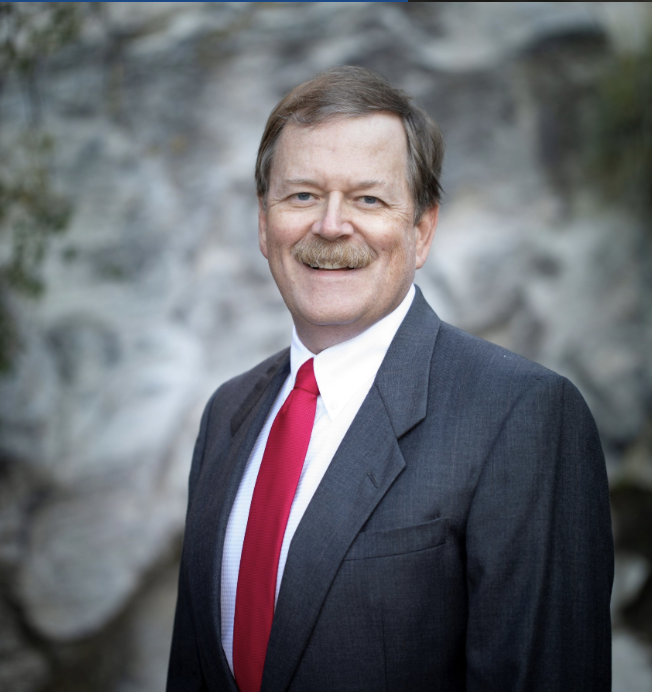
[00:00:00] Welcome to the Powering America Podcast. I'm Brian Hyde. My guest is Bill Beard, who is the Municipal Affairs Liaison for the Goldwater Institute. Bill, it's wonderful to have you on the show. For those meeting you for the first time, take a moment to tell us just a little bit about who you are and what you do.
Uh, my name is Bill Beard. I'm the Municipal Affairs Liaison with the Goldwater Institute, uh, located in Arizona. Uh, we are, uh, very much, uh, in line with our founders, uh, namesake, uh, Barry Goldwater, uh, very much about free market principles, uh, individual rights for, uh, businesses, individuals, et cetera. Uh, very much about, uh, protecting those rights, uh, property rights, individual rights, uh, uh, things like right to try, uh, very much about, uh, free market principles, making sure that, uh, whatever government policy is coming down the pike.
Uh, we try, we want to weigh in on the side of free market principles, smaller government, uh, more prosperity for individuals. [00:01:00] Well, here comes, uh, a topic that is, I'm sure weighing heavy on a few people's minds, and that is data centers. Most of us had never heard this term before, just a, a couple of years ago, but now it seems like a lot of people are talking about it.
And Bill, frankly, I'm not sure who to believe because some people have me convinced that the data centers are coming to get us, while others are saying, no, no, no. This is a good thing and it's the way of the future. So help us understand what do we need to know? When it comes to looking at data centers and, and again, observing the principles of the free market.
Uh, you know, there, there's two things to start off. You know, uh, data center is nothing more than a digital library. Uh, you know, 20 plus years ago if we needed information, we either, um, those of us that had access to it would go online and, and search through, uh, you know, dozens or hundreds of different places to find little tidbits of information.
Or we'd go to a physical location, like a library, uh, pull down the books off the shelf and, uh, and do the re [00:02:00] research. Uh, that way, uh, a a data center is simply the ability to do that. Now, from your home or your business at your desktop, you type in a few words and the information comes back to you. The thing is that folks fail to, um, appreciate is that a data center requires physical locations, uh, just like those libraries used to require physical locations for those books.
Those books have been digitized, but there still is the requirement to have that information stored somewhere. And a data center is simply the, the modern version of that old fashioned library. The other part of it is, and, um, uh, to be blunt, every person around these days seems to have one of these, uh, you know, things, um, you know, in their back pocket, uh, on their belt, uh uh, or somewhere on their person.
And each one of those smartphones. Requires a data center in order to operate, uh, be it the [00:03:00] app, be it the information you're constantly searching on there, um, with your thumbs to try and find new tidbits of information, be they, uh, business related or a more personal entertainment, uh, relation. Um, you know, you've got all the lovely, uh, social media apps that are out there.
All of those require some kind of physical location for the hardware, the software, et cetera, in order for those systems to actually operate. The other part of it is, and we, we are, we are literally in a new information age where you are required in order to do your job. You know, just operate in this 21st century requires information for you to do that job more effectively.
Okay? Yes, there are people that still have to sweat, uh, and uh, you know, do the physical labor, but I can guarantee you somewhere along the way, even those hardworking individuals are basing what they're doing on [00:04:00] some information that was. What was, uh, housed in some kind of data information processing facility somewhere.
And each one of us needs to appreciate not only that the data center is part of our lives now, but they will, they will become more and more important each day we move forward into this new century. There's a lot of people out there that, that, that want to take. Uh, and I'll, and I'll paint with a broad brush here, uh, a Luddite approach to things, uh, to the da the data center discussion, um, using, you know, oh, they're afraid of the new technology.
This data centers are not something that dropped in from outer space last week. They have been around in, in many instances. Uh uh, some of the first data centers came out literally. As those, uh, the information dawned in the 21st century, um, there was some physical location we may recall. Those of us that are, uh, say, uh, little older than, uh, mid [00:05:00] thirties or forties.
I'm being generous there. Um, you know, there, there used to be businesses, uh, or even individuals if you required. Information storage. It was either at your, on your home computer with a very large, uh, you know, uh, uh, uh, uh, hard drive that stored a lot of the information that you were using. Or in the case of businesses, they often had a, uh, a room dedicated to all the storage of all that information.
We now live in an age with cloud computing and whatnot, and the, the speed at which the internet happens to operate where. You don't require all of that information stored in these millions of different locations. You can do it in a few centrally located, um, areas. And as a result, um, you know, you, you can.
Speed up, the ability to process that information, get results back quicker and you're, you're actually maximizing the efficiency of the use of those resources. [00:06:00] You know, people complain about, oh, data centers require a lot of power, water, et cetera, et cetera. Well, if you actually look back at 10, 20 years ago when that was, that same basic information was stored in millions of different locations and chop up.
All of the power requirements that each one of us had in our homes, in our businesses, the water use, resource use, et cetera, et cetera. Um, you'd probably find that there was a lot more that was actually being used in those millions of different locations than in one data center today. If you actually do the math and do what human beings have always done, find a way with existing technology to put that technology together.
Use those resources, concentrate them into one location. Maximize the efficient use of those resources. You get better results. As a result, you're actually going to increase the efficiency and effectiveness [00:07:00] of that resource utilization. This is something human beings have done from the dawn of time. This is not new information coming to us in terms of how human beings interact with the rest of the world.
This is how we've always done things, and so a data center is just the next step in that natural evolution of utilizing those resources. For the folks that are out there that wanna complain about, oh, you're, you're, you're, you're, you're damaging the environment, et cetera, et cetera. The demand is not going to go away.
I would recall for folks that, uh, are even cursory students of human history. What happened in the 18th or the 19th century when the railroad came along, railroads simply took information and technology that was available. Steam engines, steam, um, you know, power and combined it with the ability to generate large volumes of steel [00:08:00] rails at an, at, at, at a cost efficient, uh, uh, means put them together and truly transform the l.
Transformed how everyone did transportation, the ability to get across the countryside in hours instead of weeks or months. With data centers are that kind of transf transformational, uh, technology. And the, the folks that want to complain about the the, the resource resources are not gonna be used effectively.
You might wanna rethink basic human history and then look at what data centers are through that lens. And I think you'll find a lot of your opposition and complaints will fade. Bill, I wanna come back to a couple of the concerns you mentioned, 'cause I hear these regularly. One being the, the use of. And, and I'll ask that question in a moment, but as in terms of [00:09:00] power, talk to me about how small modular nuclear reactors may or may not play a role in helping to meet power needs.
Maybe not just for data centers, but uh, but more broadly. Uh, as, as we've done the research, one of the things we've found is that a, a data center, basically wor runs 24 7. Um, there may be minor fluctuations, um, based on, you know, um, when everybody gets up on the east coast and all of a sudden the data center on the east coast might see a slight uptick in how it utilizes things.
But the way data centers actually work is they're. They, they have a pretty static, um, uh, power consumption over a 24 hour period as such, if you're gonna be supplying power to. Any large user of, uh, uh, of, of resources in the, in, in your grid, uh, in that, that distribution network, you want as many large users that are also static users of power so that when a peak [00:10:00] comes along as a percentage of the base load, it's a smaller percentage, and chances are you're gonna be able to handle those peaks a lot more efficiently and effectively.
But, but, but to your other point, one of the things that folks need to understand is. Uh, data centers are not just gonna be pick up and go, you know, randomly place themselves across the countryside. They do need access to some of those basic, uh, things in the infrastructure, infrastructure of the, the modern world.
They need access to, um, high energy, power lines. They need access to the fiber optic, uh, data system that, that a lot of, uh, uh, cities and, and, and states have. They're not uniformly distributed all across the countryside. So they're going to concentrate in certain areas where they've got access to that or they are willing to fork out the bucks to bring those power lines, bring those data, uh, uh, fiber optic data lines to them.
And in the case [00:11:00] of water, if they need water for whatever they're going to be doing, they need to, uh, have access to that as well. Okay. And, and the water question actually comes down to, um, I, I know that, uh, you know, all, um, all major, uh, you know, things using electronics like data centers, um, also tend to use a fair amount of water.
Do, is there such thing as a closed system? I, I see car washes do this where they recycle water and, and can, can use it for, for the same purpose over and over. Does, does that same principle apply or is it a totally different animal? Very much so. You know, the, the, the thing about data centers folks don't often appreciate is they are a business.
Like any other business, they are responding to the marketplace. Obviously, there's a demand. Everybody that has one of these lovely smartphones is increasing the demand. Every time one of those is purchased, every time somebody adds a new app to their smartphone, they're increasing the demand for data centers.
But the other part of it is that. The, the, the, the people that [00:12:00] develop and run the data centers, they're responding to the other market forces. They're seeing, uh, you know, the outcry of the amount of power being used, the amount of water being used as such, they've re, they've reacted. A lot of them, say even three, five years ago, were designing their data centers to use evaporative.
Cool. Therefore they would lose, quote, unquote, lose water to evaporation as part of the cooling process. The technology has advanced to the point where they're using closed loop systems where any water that they may use is being, um, uh, internally recycled. Uh, and as such, the, the, the, the most modern, uh, data centers that we've seen, uh, are actually losing less than 1% of water due to evaporation or use.
And, um, unlike. You know, the, the, the, the dreams of maybe the 25th century or some sci-fi uh, novel, uh, there is some water that is being used for any business, uh, part of the normal operations [00:13:00] when you have to use the bathroom, the kitchen, et cetera, in, uh, any other place of business. So that 1%. Is in that category.
The other part is, and again, the technology is advancing, where they're starting to use things like non-potable water, uh, uh, brackish water, uh, recycled water, uh, even some of the new technologies that we're seeing actually use non-water based cooling systems, uh, that use some other liquid to. Uh, you know, cool their system down.
Um, you know, folks need to remember that part of anything human beings do requires energy. As a result, you're gonna ha you're gonna generate heat as part of that process, and you've gotta cool it down somewhere somehow. Okay. That's actually is very encouraging to hear this. Now, um, on a similar note with the, with data centers coming in, you mentioned, look, this, this is, this is one of those shifts and we don't, we don't always perceive that we're living through a shift, but I remember when the internet really kicked in and became a daily part of our lives, I had no [00:14:00] idea we're aging ourselves.
Yeah. How, how things would change. And, and so I just kind of wanna get your subjective personal opinion. Um, how do you feel about, you know, the, the shift that we're. Undergoing right now, especially as AI begins to really take its place in in our economy. I, I think you've hit on one of the key parts of this entire discussion.
Uh, yes, there are always downsides to any new technology. Uh, human beings have always, always, always found new tools to make their lives better. As a result, there's always been someone that comes along to use that tool for negative things. Um, that, that will always be the case because unless we've, uh, found a way to change human nature, that will always be a problem for humanity writ large.
But the other part of it is, and I think this is the part of where AI discussions. Sometimes, uh, lose themselves in terms of, uh, you know, uh, some [00:15:00] sci-fi, um, uh, uh, bad, uh, whatever, Terminator, Skynet, you name it. I, I, I think one of the things just based on what's, even some of the rudimentary things that AI has done in just the last year or two, look at what they've done in terms of finding cures or treatments for disease.
I don't know about you, but if you, yourself, are suffering some from some kind of terminal or, or chronic, truly debilitating, um, disease, uh, or you've got a family member that does, and AI finds a way to speed up the process where a cure or a real treatment is found. For those diseases. I don't know about you, but I'd want about 10 of those things in my backyard because, uh, I myself have someone in my family, my partner in fact, um, is suffering from a, a, a terminal disease.
Uh, as such, it, it strikes home personally for me. Uh, I'm sure there's in, there's a lot of other people that are watching this [00:16:00] podcast that could say the same thing. I'm not saying that AI is going to be the be all and end all to solve all of life's problems. But it is one more tool in our toolbox that, um, just because there may be some negative consequences to utilizing that tool, if the upside of utilizing those tools means some people get to live, uh, a more healthy, uh, productive and long life.
I am gonna weigh in on that side of that, uh, that question. I appreciate your optimism and, and Bill, I, I especially, you know, appreciate you pointed out earlier, we are very adaptive as, as human beings and we, we, we find ways to, to make it all work. Not withstanding my friends at the buggy whip manufacturers and the candle makers who, you know, are still kind of griping about, uh, where technology brought us, but I don't think the rest of us are complaining.
And I, I think that's the, that's the, that's the thing about this entire discussion. Um, I, I've had some interviews from some other [00:17:00] media, um, uh, folks as we a a after we published, uh, our data center article, and I, I, I've been, um, frankly, both astonished and amazed and a little bit. Frightened to some extent by some of the, the questions I've gotten back from some of these reports.
Um, I'll, I'll wrap up the interview and the media person will say, you know, is there anything else you wanna include in our, as part of this discussion? And I say, you know, part of the reason we decided to write our article was we found that as we did the research, things like property rights. Things like, uh, free market principles, low hurdle entry for, uh, for, for businesses or individuals to operate in the, the, the world was frankly missing from the conversation and almost to a person that these media folks have all basically responded with the same basic statement.
I never thought of that. You've just described why this article was so important, why this discussion on data [00:18:00] centers, uh, and property rights and, you know, uh, free market principles are so critically important. Uh, the number of people that I've had discussions with that are, you know, all up in arms about data centers, be it, you know, through social media and just, uh, conversations I've had in the last few months since.
We published our, our, our data center piece. I, I, I, I've, I, I've have to remind them from, from almost to a person. You know, our whole entire system of government, of commerce, of how we treat each other is based on some foundational principles like property rights, like, uh, you know, uh, individual rights to, to, to say and do things as you see fit as long as they don't interfere with someone else's rights.
And to be blunt, the number of people that get up in arms, especially around this data center conversation. Well, you know, I, I've got a right to complain about that, that data center down the street. Okay. Yeah, you have a right to complain about it, but you don't have more rights to decide what someone [00:19:00] does with their property than the actual owner of the property does.
You're here. Again, we are talking with Bill Beard. He is the municipal affairs liaison for the Goldwater Institute. Bill, I do have to ask you for people who wanna get their hands on that report, on data centers, where can they find that? Uh, go to goldwater institute.org. Um, I, I'll try and do this. I don't know if it'll work.
Uh, I've got a QR code that I can, uh, hold up to the camera here and maybe that might come through on, on your end. Uh, the camera's not cooperating. It's trying to blur it up. Okay. We will include a link in the show notes again. Okay. Talking with, appreciate that Bill Beard. Bill, thanks for joining us on the Powering America Podcast.
Thank you.