Show full transcriptHide transcript
[00:00] Bryan Hyde: Welcome to the Powering America Podcast. I'm Bryan Hyde, and today I'm happy to welcome Wayne Weingarten and Kerry Jackson to the show. We are gonna be talking about something that's gonna be very relevant to a lot of people, if not now, in the very, very near future. Both of these gentlemen are with the Pacific Research Institute. Wayne, I'm gonna have each one of you take just a moment, if you would, to talk about who you are and what you do. Let's start with you, and then Kerry, I'll offer you that same opportunity.
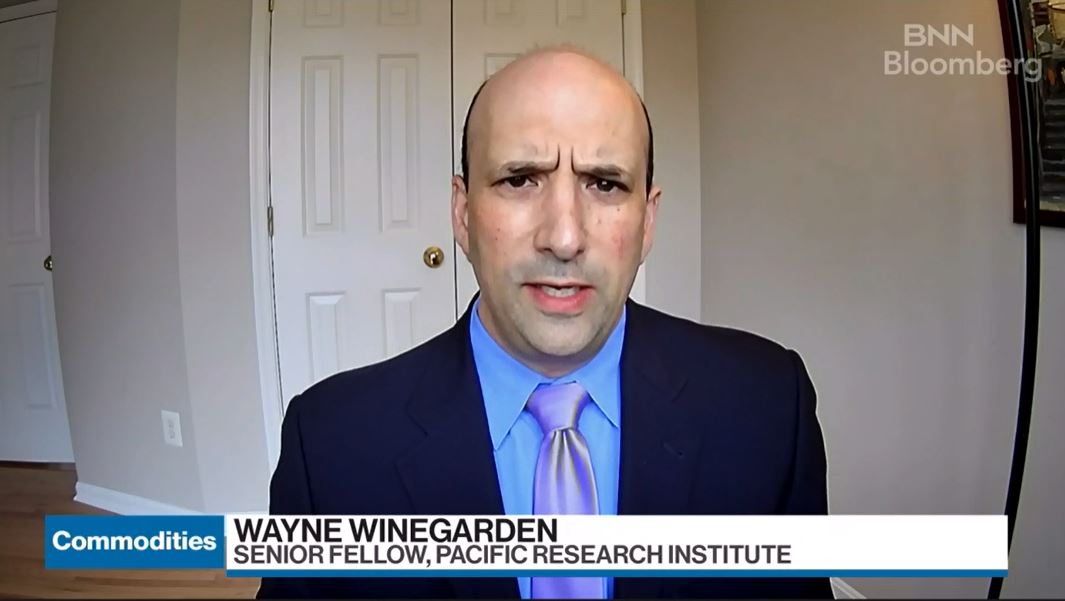
[00:25] Wayne Winegarden and Kerry Jackson: Well, absolutely. And Bryan, we're just so happy to be here with you today. Let me just start with Pacific Research Institute. We're a free market think tank. We're a national think tank that is headquartered in Pasadena, California. We work on a range of issues from healthcare to energy and the environment to taxes and homelessness. My personal role, I'm a senior fellow in business and economics. So I cover kind of the world from an economic viewpoint, I would say.
[00:58] Bryan Hyde: Very good. And Cary, if you wouldn't mind telling us a little bit about yourself.
[01:02] Kerry Jackson: I'm also a fellow at Pacific Research Institute, and I have focused on California issues since the fellowship began in 2016. Now it's almost a long time to forget. Before that, I was an editorial writer at Investor's Business Daily. So I put in nearly 30 years— well, let's be a little more accurate, almost 27 years of living in California. So I have been focused on California issues too. over that time. So spent a little time in D.C. in the mid-'90s too, working for a think tank there. So I've been at this for almost longer than I can remember.
[01:37] Bryan Hyde: You know, it's interesting when I hear anyone say California issues, immediately my mind snaps to energy because it seems like that's what I hear about more often than not is, you know, California struggling sometimes, rolling brownouts and extremely high energy costs. Would either one of you or maybe both of you like to kind of set the stage for us when we talk about some of the struggles that California has with energy policy. Where's a good place to start?
[02:03] Kerry Jackson: Well, I think their target of 2045, when all retail sales of electricity have to be essentially renewables or carbon-free, they're going to call it zero-emission sources. But the fact is, you're only going to get Really, and practically speaking, you're only going to get wind and solar. There'll be a few other things mixed in there, but I don't think they're going to make a difference. And so, of course, now they're cutting back on fossil fuels. We got 3 plants that are going to be closing at the end of the year, going to hurt reliability. They've closed how many now, Wayne, nuclear plants? I'm just thinking of just one right off the top of my head and recently— Yeah.
[02:51] Wayne Winegarden and Kerry Jackson: Correct.
[02:52] Kerry Jackson: That seems to be not an option coming out of at least the large-scale industrial nuclear. So, you know, they have a target, they have a deadline, and you wonder if they're going to meet it.
[03:06] Wayne Winegarden and Kerry Jackson: Yeah, it's very much a, I would say, a forced transition in a specific way is a way to think about it. And I think undoubtedly, There's been some great advancements. We talk about solar, we talk about battery backup systems. When people say these systems have progressed, it's 100% correct. But it doesn't— just because they've progressed doesn't necessarily, A, mean that's the answer, B, you know, again, economics perspective, at what cost? And I think that's really where things start to, you know, the wheels start to come off of the wagon. When you're talking about electricity rates that are twice, the national average. As we've increased our share of solar and wind, the alternative energies, you've seen just that direct correlation that prices have gone up right along with it. You then try to connect that with the statement that the LCOE, which is the way we measure the cost of a new facility, is cheaper for solar and wind than other resources, but there's all sorts of caveats that go around that. You don't take into account reliability. You don't take into account that there's lots of new transmission lines you have to put down and that costs money. You don't take into account all of the backup battery requirements or natural gas backup generation that's required. So I think if you think of it in one word, it's such a complicated, system and we've created a bit of a Rube Goldberg structure. And then people try to, because it's so complicated, come out with one number and try to, to basically plan a very complicated system, taking into account only one goal and not looking at kind of the bigger picture. Or are there, you know, different ways to cut the Gordian knot? And, you know, there's consequences. And we see it every day with the lack of affordability that Californians are screaming about.
[05:20] Bryan Hyde: So I have to ask this just to get my mind around why energy is so expensive in California. Is it a function of— is the demand so high because there are so many people either moving to the state or living within the state? Or is it that technology is advancing at a pace that the demand has risen, you know, beyond even, you know, population growth?
[05:40] Wayne Winegarden and Kerry Jackson: No, it's policy-driven. I'll let Kerry jump in. Sorry, I got passionate about this one, but it's completely demand-driven. In fact, Population in California stagnated. We've been actually losing— when you look at not international migration and births, if you just look at where people choose to live, we've been losing people for a decade now. It's undoubtedly not that just natural demand is outstripping our supply. It's a policy creation where we artificially inflate the cost of production. We artificially make it more difficult to have generation when you keep shutting down plants that work, that restricts supply. So it's a policy-created imbalance. Now, there's been great progress. We have actually more generation capacity now than we used to. We have a lot more battery backup storage, and that is supposed to kind of transition The energy system. So we have lots of solar during the day, it's fine. The sun sets, the batteries are supposed to get you through the rest of the high-end use. And all of this works on paper, but if something doesn't go exactly right, that's where kind of issues arise. And I'd say one more thing, and then I'll let Kerry get a word in. But the other important thing you were talking about, demand. Remember, lots of people live along the coast. which is very, very temperate. You know, um, we don't have air conditioning in my house because you don't need it. We just never get that high. So there's a lot of people who live in places where you actually should be drawing less energy because you just don't need the electricity.
[07:29] Kerry Jackson: Yeah, I— well, that was what I was going to say. You have a state of 39 million, roughly 39 million, and almost all of them— that's— and I shouldn't say almost all of them. You do have the inland empire is fairly well, fairly populated, but A big chunk of that 39 million will live within a few miles of the ocean with this Mediterranean climate that doesn't necessarily need to be cooled or warmed that much during any given year. So, you know, the demand for that power is, you know, electricity and natural gas is just not going to be— shouldn't be that high and shouldn't affect your prices.
[08:01] Bryan Hyde: My understanding too is that the green energy policies, while they may be doing a favor for Mother Earth, also come at a pretty significant cost and the efficiency still is catching up. Now, there is another green energy, although some people may, you know, strongly disagree when I suggest nuclear is one of the greenest energy sources out there. Let's talk a little bit about the role that nuclear power could play if California policymakers were to actually give it its proper due.
[08:33] Kerry Jackson: Yeah, you can't— it's undeniable that it is, you know, it's green, it's renewable, it's sustainable, it is reliable. It just keeps going. And You wonder, and I did, and it finally was explained to me by somebody smarter than me, well, what's the pushback on this? Why is nuclear power looked at in the way it is? And apparently people will conflate or have come to conflate it with nuclear weapons, which obviously are dangerous. And then there was Three Mile Island, I believe in '79, the best of my memory, it was '79. Yeah, it was '79, 'cause Carter was still in office. It looked like it might be bad. It wasn't that bad. There was a you know my recollection was a small leak. Certainly wasn't on on the the level what we saw in Kiev. Well, you know the now I can't remember the name of the everybody knows it except me at the moment. I think
[09:26] Wayne Winegarden and Kerry Jackson: Chernobyl.
[09:27] Kerry Jackson: Yeah, okay, thanks Wayne. He's Wayne's always helpful. Chernobyl, yes, which now has a concrete dome around it to. protected. But so people conflate it with dangerous, you know, the risk there. And if you think about it, I can think of— well, I don't think anybody has died in a nuclear power accident commercially in this country. I think one, there was one fatality in the military in maybe the '40s or '50s when they were working on nuclear energy for power, for electricity to generate power, but not in any commercial application. We've been sending men down in mines and holes in mountains, tunnels, and hundreds, maybe thousands, I don't know what the count is, in this country have died. I have natural gas in this house. I think it's a great way to— it's a great source of power, but we see places where pipes or where, you know, the— you have issues, you have leaks, and then the whole neighborhood goes up, you know. Yet here we have nuclear, which is, you know, not, uh, doesn't have a bad track record, actually has a good one, and you have a lot of resistance to it.
[10:44] Wayne Winegarden and Kerry Jackson: And I, I would add, because you're saying green technologies, and I think we need to be really careful about what we call green and what we don't call green. There's trade-offs and every source has a trade-off, right? If you think about solar, right? How does it— how do you get solar energy? Well, you need some sort of big machine to dig up stuff out of the earth. Then you have to refine that stuff and then you get energy and then you have a disposal issue. I mean, it sounds a lot like fossil fuels, right? I mean, in terms of the process. And when you think about the lifetime emissions, and that's really what matters, right? And you're talking about like, happened in California. We focus very much on the emissions from California, which is important, but it's also the global emissions. So that if we send manufacturing overseas, well, yeah, you can say California is producing less emissions, but globally it's arguably worse. Well, comparing nuclear to solar, you actually have fewer lifetime emissions with nuclear than you do with solar, and it's about the same as wind. Although wind is not as good of a resource as solar seems to be becoming. So why isn't it a green energy source? I mean, and I think that's really important. There are some really very difficult disposal issues that California is going to be hitting in 10, 20, 30 years when all these solar panels need to be safely disposed of because there's dangerous chemicals in there. When all these wind turbine blades blades need to be dealt with. There's all sorts of green issues that come with that. So I would argue that exactly kind of what Kerry was going, that there is a— it's a mental block, it's a mental belief. There are certainly obstacles that need to be overcome, and we can talk about some of those. But there are some really exciting things happening in the nuclear space. It is a safe generation resource. It has some real advantages compared to other sectors, and it needs to be integrated in the right way. Again, just like there's places where solar makes sense and there's places where nuclear makes sense, and you need to put the right resource at the right place at the right time. That's what's missing in California. That's really, I think, when we're talking about what's the right energy policy, that's Really, the outline to it.
[13:15] Kerry Jackson: Just really quickly too, don't forget about— and I know you didn't, Wayne— the amount, the massive amount of concrete that needs to be poured to site or to foot wind turbines. And the green crowd, if we can go back to that again, doesn't like concrete. And if you talk to people in the concrete business, and I've known them, they'll say, we're not clean necessarily. We do what we can. But there is just a process of making this stuff and getting it where needs to go, you know, that they don't like. But yet they seem to be just fine with, you know, again, massive amounts of this stuff, you know, to cite their particular source that they favor.
[13:58] Bryan Hyde: Tell me about small modular reactors or SMRs. I've heard from a number of people that this appears to be, you know, the biggest breakthrough in nuclear power, probably within our lifetimes. But for people who are hearing about it for the first time, what do they need to understand about SMRs?
[14:17] Kerry Jackson: Well, this caught my eye, and I can't remember how many years ago, probably 2 or 3, maybe more, that I just— you run into things, you're working on something else, and you're doing some research, and you find something, you go, well, that's surprising. I'd like to know more about that. So I started writing a little bit about these small modular reactors, and they're called backyard nukes, essentially. And I'm not going to say everybody's going to have a nuclear reactor the size of their refrigerator in their backyard powering their own house. Maybe at some point that turns to be the case, but they're not, you know, right now they're not that small. But these, these are, these are reactors that almost essentially you can power a neighborhood instead of an entire region, I guess. Maybe is that— would you think that's a fair way to put it, Wayne? And, and yes, it is. There's a promising future there. And it's not just one side of the political spectrum that's saying this. There are thoughtful people on both sides saying, We need to explore this. This is going to be what's going to be very helpful to us if we can get through the regulatory process. And I've mentioned this to Wayne before. I'm old enough to remember when— well, I've been waiting for nuclear fusion for a long time, cold fusion. And it's just like next year, next year. And so I've kind of given up on that to be something that's going to be ready to go. Same with hydrogen. I remember being told not long after I arrived in Washington more than 30 years ago that hydrogen is going to be the next great source of power. You can go backyard, take a bucket to the creek, bring it back, pour it in whatever system you have, and then it's going to create electricity from the hydrogen drawing out of the water. And again, that's like, it's just around the corner, but it never happens. But I think the SMRs— I mean, companies are putting money into this. They're investing. We're looking at some regulatory I think some regulatory hurdles are probably going to be coming down. So I think it's, it's, it's very promising. And if you really want to look into something that's going to be renewable and reliable and safe, we need to look hard at this.
[16:25] Wayne Winegarden and Kerry Jackson: I mean, I would say one of the issues we have with nuclear right now, and the problem is if you look at the cost here in the US, Compared to the cost in South Korea, let's say. In South Korea, one, our regulatory burdens are excessive and that we can address, but they actually continually— it's what they call the nth of a kind, so that they're basically mass-producing it. It's the same one. You think Henry Ford, you get those types of efficiencies and that's not what we're doing here in the US. We really have what's really a first of a kind and that creates one, you're building on site, it becomes very complicated, interest costs start starts piling up and delays inevitably happen, you see, you end up with a less efficient kind of nuclear structure. Well, I bring that up with SMRs is because SMRs is a way to really start getting that nth-of-a-kind kind of benefit that you really need to see to really make nuclear more competitive. Because right now with the regulatory structure, with this idea that each plant is unique, not completely unique. That's why I paused for a second. But, you know, they're individualized. That is inflating our costs. That makes nuclear more expensive and it creates delays. It's harder to plan with. SMRs gives you that ability to kind of commoditize it a bit. You actually would be producing in a specific plant and bringing it on site. The size of it I get away from the backyard, but you can actually site some of these SMRs in existing natural gas plants that you're shutting down or coal-fired plants that you're shutting down. Now what you actually get, which is exciting, is you don't need to rewire the grid because you have the transmission lines right there and you can connect in that. The cost of solar is higher than they admit. That's the wrong word. I shouldn't use that word. It's higher than what's often recorded because you're not including the transmission lines, right? You gotta site solar where the sun is correct, and that's not necessarily where we live. And so you get all this infrastructure you have to put down. And oh, by the way, if you're running that infrastructure through fire-prone zones, now you've got all of that hardening of the system you have to do, or you're increasing risks. Well, with these SMRs, you can site them right on kind of that facility where they are. They fit right in. You can get the cost down where If you again commoditize it and get all those benefits, now it becomes even on the LCOE, the levelized cost of electricity, how they compare costs for different brand new sources, you're actually on par or cheaper than solar and you have the reliability. One thing I think that talks about the potential of SMRs, and I just found this out recently, I should have probably realized it earlier, but a lot of the AI companies, when they're talking about generating their own facilities, they're contracting and looking toward these advanced SMR projects as a way to create the energy that they need to power these data centers. Now, they're not just— they're not pulling from the grid, they're actually adding to the grid. I don't know the impact of water, but I would imagine there's beneficial impacts there as well. You actually have a lot of interest in these in some unexpected places, which could be quite exciting.
[20:05] Kerry Jackson: I think looking when what you're saying, the private sector getting in or these tech companies, I think you're just going to keep looking at investment and capital where it's flowing in this. These companies, it's not just Google who would like to have, or Microsoft or whoever might want to have a nuclear, an SMR powering their particular data center here or there, but it's the companies who are building these things, too. And you're getting investment in these companies because somebody's saying, yeah, you see the future, we see the future, and we're willing to put our money there. And not every investment is going to turn out, but when you see as much as I think we have been seeing and will be seeing going to this particular technology, pay attention. There's something there.
[20:53] Wayne Winegarden and Kerry Jackson: People spend their own money better.
[20:55] Bryan Hyde: Again, my guests today have been Wayne Weingarten and Kerry Jackson, both with the Pacific Research Institute. Guys, I feel pretty optimistic after this conversation. Thank you so much for joining us on the Powering America podcast.
[21:08] Kerry Jackson: Glad to be there— or here. Thanks for inviting us.